11 Signs of an Empath Woman and What They May Mean
If you searched for signs of an empath woman, you may be trying to understand why emotions seem to reach you so deeply. Maybe crowded rooms drain you, conflict stays in your body, or people often come to you with their pain. This article is for education and self-reflection, not diagnosis. You’ll learn what empath traits can look like, how they may affect relationships, and how to protect your emotional energy. You can also explore our empathy test online as a gentle self-reflection tool if you want a more structured next step.

What Does It Mean to Be an Empath Woman?
An “empath woman” is a common term for someone who feels deeply tuned in to other people’s emotions. However, it is not a clinical label. It is better understood as a way to describe emotional sensitivity, strong empathy, and social awareness.
When you read about the signs of an empath woman, treat them as reflection prompts. They are not proof of who you are. Instead, they can help you notice how you respond to people, stress, relationships, and emotional environments.
Empathy vs Emotional Sensitivity
Empathy means you can understand or share another person’s emotional experience. Emotional sensitivity means you may react strongly to emotional cues, tone, tension, or conflict.
These can overlap. For example, you might understand a friend’s sadness and also feel heavy after listening to them. That does not mean anything is wrong. It may simply mean your emotional system works with high awareness.
Why Some People Feel Others’ Emotions Deeply
Some people notice tiny shifts in voice, facial expression, or body language. As a result, they may sense when someone is upset before anything is said.
In daily life, this can feel helpful. However, it can also feel tiring. If you constantly scan the room for emotional changes, your mind may rarely feel “off duty.”
Can Empath Traits Feel Intuitive or Spiritual?
Some people describe empath traits as intuitive or spiritual. They may feel they “just know” when something is wrong.
A grounded way to understand this is emotional pattern recognition. You may notice small signals quickly, even before you can explain them. However, intuition is not always accurate. It works best when paired with reflection.
Common Myths About Empaths
A few myths can make empath traits confusing:
- Myth: Empaths always know what others feel.
- Myth: Empaths must fix everyone’s problems.
- Myth: Empaths cannot set boundaries.
- Myth: Emotional sensitivity is always a weakness.
In reality, empathy works best with boundaries, rest, and self-awareness.
11 Signs of an Empath Woman
The following signs of an empath woman are not rules. Instead, use them as a checklist for reflection. You may relate to many, a few, or none.
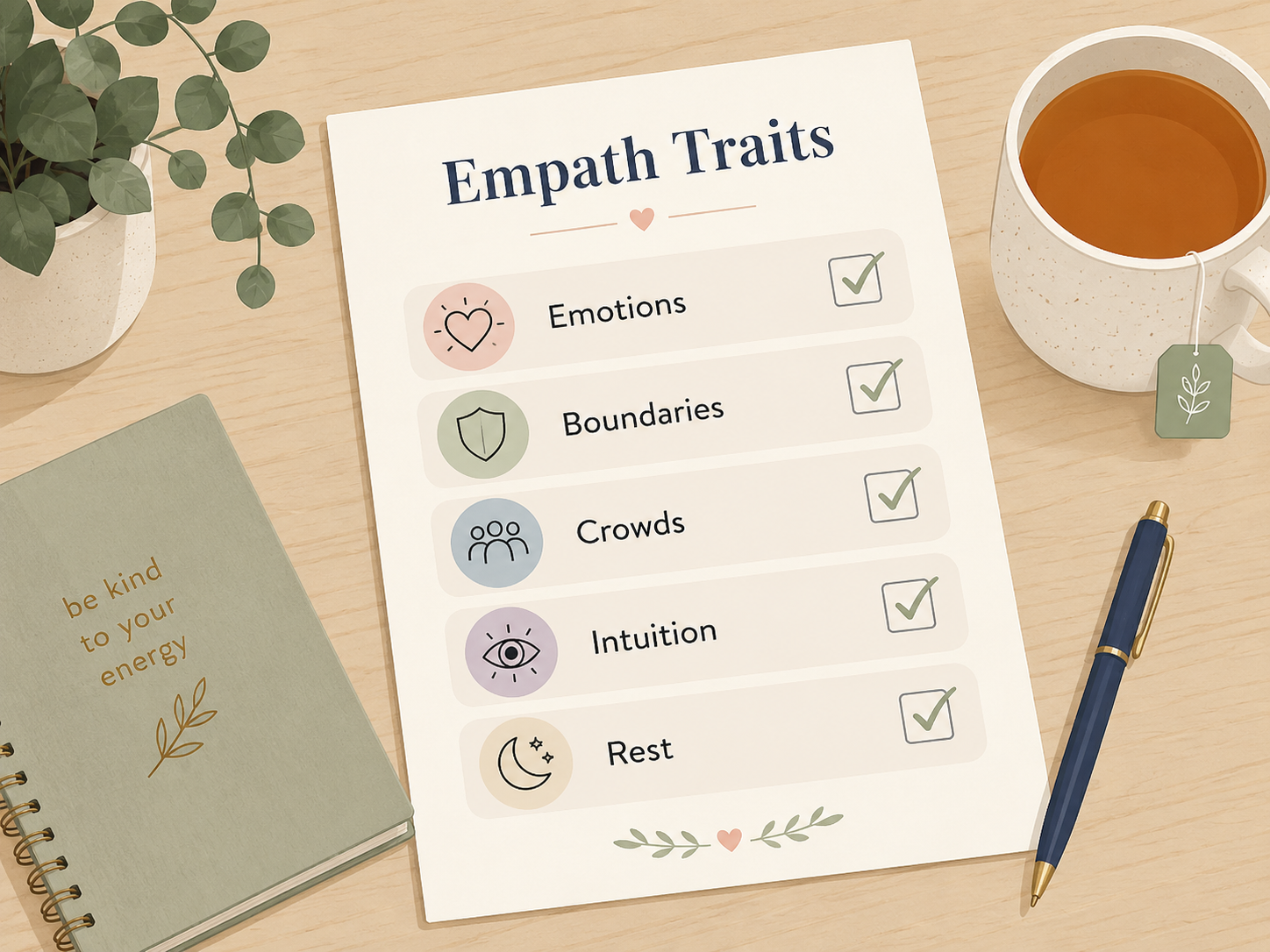
You Absorb Other People’s Emotions
You may walk into a room and quickly feel the mood. If someone is tense, sad, or angry, you might feel it in your own body.
For example, a friend’s stress may leave you feeling restless long after the conversation ends. This is one of the most common patterns people connect with empath traits.
Crowded Places Feel Emotionally Draining
Busy places can feel overwhelming. It may not be only the noise or movement. Instead, the mix of emotions, faces, and social energy can feel like too much.
After a party, office event, or family gathering, you may need quiet time to feel like yourself again.
You Often Sense Tension Before Others Do
You may notice when a conversation shifts. A slight pause, sharper tone, or forced smile might stand out to you.
Because of this, you may try to smooth things over quickly. However, that can also make you feel responsible for everyone’s comfort.
People Naturally Open Up to You
Friends, coworkers, or even strangers may share personal things with you. They may say you are easy to talk to.
This can be a gift. However, it can also become heavy if you often carry other people’s emotions without space to recover.
You Need Alone Time to Recharge
One clear sign of emotional sensitivity is needing quiet recovery time. You may enjoy people, yet still feel drained by too much emotional input.
Alone time does not mean you dislike others. Instead, it gives your nervous system room to settle.
You Feel Deeply Affected by Conflict
Conflict may stay with you for hours or days. Even small arguments can feel intense.
You may replay conversations, worry about hurt feelings, or feel physical tension after disagreement. Because of this, you might avoid conflict, even when a calm conversation would help.
You Struggle to Set Emotional Boundaries
You may say yes when you are already tired. Or you may listen for too long because you do not want someone to feel alone.
However, caring does not require unlimited access to your time and energy. Boundaries help empathy stay healthy.
You Overthink Other People’s Feelings
You may ask yourself, “Did I upset them?” or “Are they okay with me?” This can happen even when there is no clear problem.
Over time, this habit can create stress. Therefore, it helps to separate what you know from what you are guessing.
You Feel Emotionally Exhausted After Helping Others
Helping can feel meaningful. However, if you always give without recovering, you may feel empty, irritable, or numb.
This is not a lack of kindness. It is often a sign that your empathy needs better support.
You Have Strong Intuitive Reactions
You may get strong first impressions about people or situations. Sometimes those impressions may be useful.
Still, try to pair intuition with evidence. Ask yourself, “What did I actually notice?” This keeps emotional awareness grounded.
You Sometimes Ignore Your Own Needs
You may focus so much on others that your own needs become background noise. You may delay rest, avoid asking for support, or minimize your feelings.
If this pattern sounds familiar, it may be time to treat your own emotions as important too.
What Physical Signs Can Empath Women Experience?
Some people search for signs of an empath woman physically because emotional sensitivity can feel physical. However, physical symptoms can have many causes. So, it is important not to assume empathy explains everything.
If physical discomfort is frequent, intense, or affecting your life, consider speaking with a qualified professional.
Feeling Tired After Emotional Interactions
You may feel unusually tired after emotional conversations. Even if the talk was calm, you might feel mentally full afterward.
This can happen when you listen closely, track tone, and hold space for someone’s feelings.
Sensitivity to Noise, Crowds, or Tension
Some empath women feel affected by loud sounds, busy rooms, or tense environments. The issue may not be one single thing. Instead, many small inputs stack up.
A helpful question is: “What drains me most: noise, conflict, pressure, or too much social time?”
Emotional Stress and Physical Fatigue
Emotional stress may show up as tight shoulders, headaches, stomach discomfort, or low energy. However, these signs are not specific to empathy.
Therefore, treat them as signals to slow down, not as proof of a label.
How Do Empath Traits Affect Relationships?
Relationships can make emotional sensitivity more visible. Love, friendship, and family life often involve closeness. For an empath woman, that closeness can feel beautiful and intense.

Why Empaths Often Attract Emotionally Intense People
You may attract people who need comfort, advice, or steady emotional attention. They may feel safe with you because you listen deeply.
However, attraction is not destiny. You can care about someone and still choose relationships that feel balanced.
The Difference Between Caring and Overextending
Caring means you show concern. Overextending means you keep giving after your energy is gone.
Here is a quick check:
- Caring: “I can listen for a while.”
- Overextending: “I must fix this tonight.”
- Caring: “Your feelings matter.”
- Overextending: “Your feelings matter more than mine.”
Why Some Empaths Experience Intense Emotional Reactions
You may feel anger when you have ignored your own limits for too long. Sometimes, empath anger is not sudden. It builds from repeated emotional overload.
If this happens, pause before reacting. Then ask, “What boundary did I need earlier?”
Healthy Emotional Boundaries in Relationships
Healthy boundaries are not cold. They are clear.
Try phrases like:
- “I care about you, but I need some quiet tonight.”
- “I can talk for 20 minutes, then I need to rest.”
- “I want to support you, but I cannot solve this for you.”
Boundaries protect connection. They do not cancel it.
What Are the Positive and Negative Traits of an Empath?
The signs of an empath woman can include both strengths and challenges. A balanced view matters. Otherwise, empathy can become either a “superpower” label or a burden label.
Emotional Insight and Compassion
Many empath women notice feelings quickly. You may offer warmth, patience, and care. This can make you a thoughtful friend, partner, parent, or coworker.
Also, emotional insight can help you communicate with kindness. You may sense when someone needs space or support.
Burnout, Overwhelm, and Emotional Exhaustion
The harder side is emotional overload. If you absorb too much, you may feel tired, anxious, or disconnected from yourself.
Common mistakes include:
- Saying yes too quickly
- Staying in draining conversations too long
- Confusing guilt with responsibility
- Ignoring your body’s need for rest
The fix is not to care less. It is to care with limits.
Why Boundaries Matter for Empaths
Boundaries help you stay compassionate without losing yourself. In fact, they make empathy more sustainable.
If you want to understand your broader empathy patterns, you can check your traits with this empathy test. It offers structured reflection based on empathy-related questions, not a clinical conclusion.
How Can Empath Women Protect Their Emotional Energy?
If you recognize several signs of an empath woman, the next step is not to hide from people. Instead, build small habits that protect your emotional energy.
Creating Quiet Recovery Time
Schedule quiet time after intense social events. Even 10 minutes can help.
You might try:
- Put your phone away.
- Sit somewhere calm.
- Notice your breathing.
- Ask, “What am I feeling that is mine?”
- Let the rest pass without solving it.
Recognizing Emotional Overload Early
Emotional overload often has early signs. You may feel tense, foggy, impatient, or suddenly tired.
Use this mini-checklist:
- Am I taking on someone else’s mood?
- Have I eaten, slept, or rested enough?
- Did I agree to more than I can handle?
- Do I need quiet before I respond?
If most answers point to overload, pause before giving more.
Learning to Say No Without Guilt
“No” can feel harsh if you are used to caring for others. However, a kind no is still kind.
Try these simple phrases:
- “I cannot talk tonight, but I hope you find support.”
- “I care, and I need to rest first.”
- “I am not the best person for this right now.”
What Situations Commonly Overwhelm Empaths?
Many empath women feel overwhelmed by:
- Constant conflict
- One-sided relationships
- Loud or crowded spaces
- Emotional dumping
- Too much news or distressing media
- No time alone
Once you know your patterns, you can plan around them.
Could a Self-Reflection Test Help You Understand Your Traits?
After reading about the signs of an empath woman, you may want a more structured way to reflect. A self-reflection test can help organize what you notice.
It should not tell you who you are forever. Instead, it can give you language for patterns you already experience.
Why Self-Reflection Can Be Helpful
Self-reflection helps you move from “I feel everything” to clearer questions:
- When do I feel most drained?
- What emotions do I absorb most often?
- Where do I need stronger boundaries?
- Which empathy traits feel like strengths?
This makes the topic more practical.
What the Empathy Test Measures
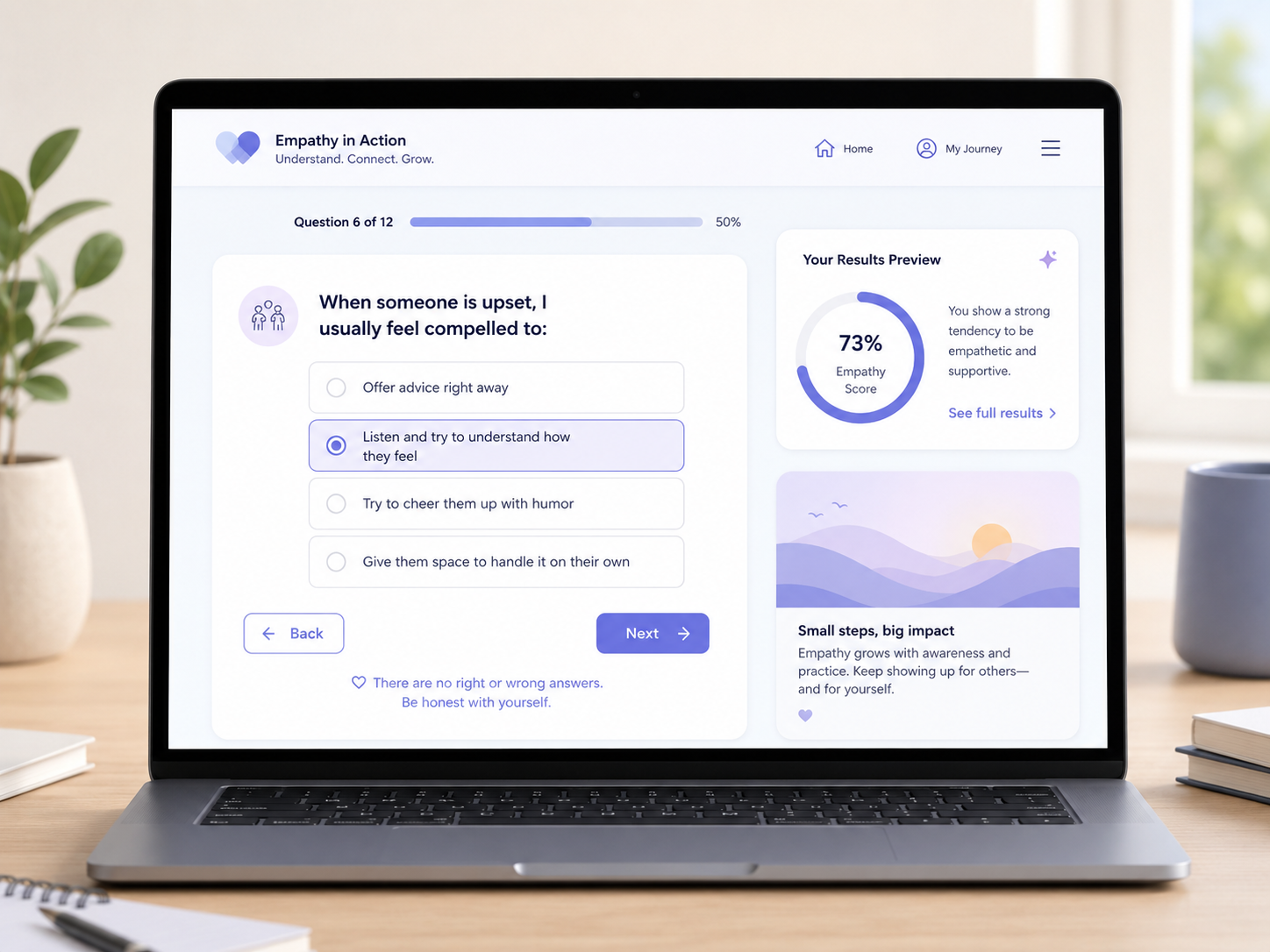
EmpathyTest.me offers a free online empathy test based on the Empathy Quotient framework. It is designed to help you reflect on empathy, emotional awareness, and social understanding.
The tool provides a score and level explanation. However, it is for educational self-reflection only. It does not replace professional evaluation or support.
How Scores Can Support Emotional Awareness
A score can give you a starting point. For example, it may help you notice whether you often understand emotions, respond to social cues, or feel affected by others.
If you want a gentle next step, you can try the empathy test as a self-reflection tool. Use the result as a prompt for awareness, not as a final label.
Where to Go From Here With Greater Self-Awareness
The signs of an empath woman can help you name patterns that may have felt confusing. Maybe you absorb emotions easily. Maybe relationships drain you when boundaries are unclear. Or maybe your sensitivity is both a strength and a challenge.
In short, the goal is not to label yourself too quickly. The goal is to understand yourself more kindly.
A helpful next step is to choose one small action:
- Notice when your energy drops.
- Practice one boundary phrase.
- Take quiet time after emotional conversations.
- Reflect on which traits feel helpful and which feel heavy.
If emotional distress, anxiety, conflict, or physical discomfort keeps affecting your daily life, consider support from a qualified professional. And, if you want a structured starting point, the empathy test online guide can help you explore your empathy patterns with more clarity.
Frequently Asked Questions
Can empath traits change over time?
Yes. Empath traits can shift with life experience, stress, relationships, and self-awareness. Boundaries and coping habits can also make emotional sensitivity easier to manage.
Is being an empath the same as having high emotional intelligence?
Not exactly. Empathy can be part of emotional intelligence, but emotional intelligence also includes self-regulation, communication, and decision-making.
Why do empath women feel emotionally drained so easily?
Some empath women feel drained because they notice emotional cues often and respond deeply. Overextending in support roles can also add to emotional fatigue.
Are empath traits connected to personality type?
Some personality styles may be more emotionally sensitive or reflective. However, no single personality type defines all empath women.
What should empaths avoid in daily life?
Empaths may benefit from limiting emotional overload, one-sided relationships, overcommitment, and too little recovery time. The goal is healthier limits, not isolation.
Do empaths express love and care differently?
Some empaths express love through deep listening, emotional support, and thoughtful attention. However, love languages vary by person.
How can I explore my empathy level more clearly?
You can journal about emotional patterns, notice what drains or restores you, and use an educational self-reflection tool to organize your thoughts.
Can empath traits feel spiritual or intuitive?
Yes, some people describe empath traits that way. A grounded view is that you may notice subtle emotional cues quickly, then interpret them intuitively.