9 Types of Empaths: Which One Resonates With You?
Have you ever been told you're "too sensitive"? Do you walk into a room and instantly feel the mood, or feel drained after being in a crowd? If so, you might be more than just an empathetic person; you could be an empath. Understanding this trait isn't about labeling yourself, but about gaining clarity. This article will guide you through the different types of empaths, helping you identify your unique way of experiencing the world. We will explore clear definitions, common signs, and practical steps for managing your energy. To begin this journey, you can explore your traits with the Empathy Test.
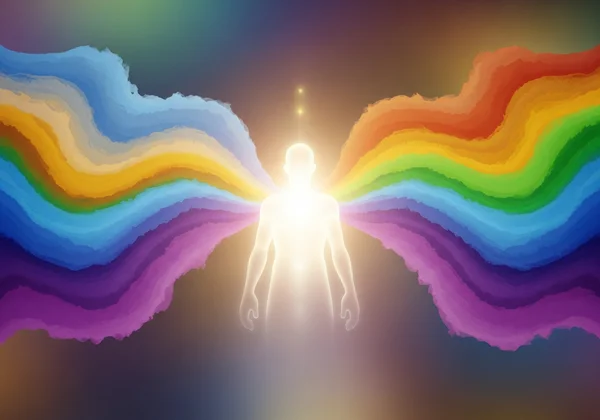
What Is an Empath, Really?
The term "empath" is gaining recognition, but what does it truly mean? It goes far beyond simply feeling for others. It's about a deep, often subconscious, connection to the emotional and energetic states of people, places, and even objects.
What does it mean to be an empath?
To be an empath means you have a highly attuned nervous system that acts like a sponge for external energies. You don't just perceive what others are feeling; you often absorb and experience those feelings as your own. For instance, you might feel anxious or sad without a personal reason, only to discover later that a close friend was going through a difficult time. This absorption is involuntary and can be overwhelming if not properly understood and managed.
How is being an empath different from just having empathy?
Having empathy is a universal human quality. It is the ability to understand and share the feelings of another person from your own perspective. For example, you can see a friend is sad and say, "I understand why you feel that way." However, being an empath is a more profound experience. An empath doesn't just understand the sadness; they feel the sadness in their own body. The line between their emotions and the emotions of others becomes blurred. Empathy says, "I feel for you." Being an empath says, "I feel with you."
What are the core characteristics shared by most empaths?
While there are many different types of empaths, most share a few core characteristics. These traits form the foundation of the empathic experience.
- Deep Sensitivity: You are highly sensitive to sounds, smells, lights, and emotional atmospheres.
- Emotional Absorption: You take on the emotions of others as if they were your own.
- Strong Intuition: You have a powerful "gut feeling" about people and situations, often knowing things without a logical explanation.
- Need for Solitude: You require regular alone time to recharge and disentangle your energy from others.
- Dislike of Conflict: Arguments and anger can feel physically and emotionally painful.
- Natural Healer/Listener: People are often drawn to you with their problems, seeing you as a compassionate confidant.
Are You an Empath?
Recognizing yourself in the descriptions above can be a powerful moment of validation. It’s the first step toward understanding why you feel the way you do in certain situations. If you're wondering whether these traits truly apply to you, a little self-reflection can provide clarity.
What are the common signs that I might be an empath?
Here is a simple checklist of common signs. See how many of these resonate with your personal experience.
- You feel drained after spending time with large groups of people.
- You can sense the "vibe" of a room as soon as you enter it.
- You are deeply affected by violence or tragedy in movies and the news.
- Strangers often open up to you and share their life stories.
- You have a hard time distinguishing your own feelings from someone else's.
- You feel a deep connection to nature, animals, or both.
- You often feel overwhelmed in busy, chaotic environments.
- You need quiet time to process your day and emotions.
- You can tell when someone is not being honest, even if they seem sincere.
- You often put others' needs before your own, sometimes to your own detriment.
Introducing the Empathy Test: An Educational Tool for Insight
If you found yourself nodding along to many of the points on that checklist, you may be an empath. However, self-discovery is a personal journey. To help you navigate it, we've created a resource designed for exploration, not diagnosis. This is where our Empathy Test online can offer some clarity. It's an educational tool that helps you explore your traits in a structured way, providing insights into your unique sensitivities. It serves as a gentle mirror, reflecting your experiences back to you for deeper understanding.
The 9 Different Types of Empaths and Their Unique Traits
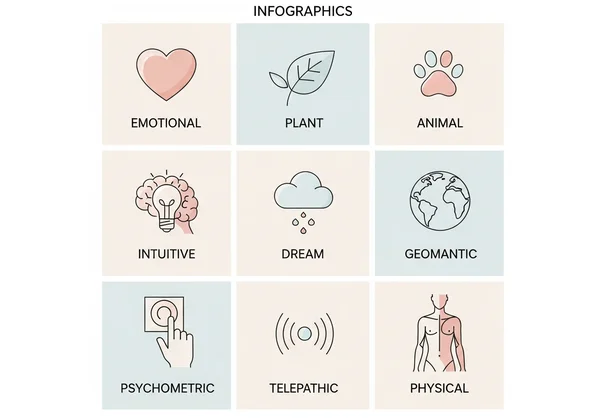
Just as there are different personality types, there are also different types of empaths. Your empathic abilities may be strongest in one or more specific areas. Discovering your primary type can help you understand your experiences more clearly and learn how to best use your gift. Below are some of the most recognized empath types.
The Emotional Empath
This is the most common type. An Emotional Empath is highly attuned to the emotional state of others. You can feel the happiness, sadness, anger, and anxiety of those around you, often absorbing it into your own body.
The Physical (or Medical) Empath
Physical Empaths can absorb the physical symptoms of other people. If someone near you has a headache or a sore back, you might suddenly experience similar aches and pains without any medical reason. This can also involve taking on the energy of physical healing.
The Intuitive (or Claircognizant) Empath
This type of empath has a powerful "knowing." You receive clear insights and information about people and situations without any logical explanation. It's a direct download of truth that bypasses the rational mind.
The Plant (Flora) Empath
A Plant Empath has a deep connection to the plant kingdom. You can sense the needs of plants, feel their life force, and may have a natural talent for gardening. Being in a forest or a garden feels deeply rejuvenating to you.
The Animal (Fauna) Empath
Similar to a Plant Empath, an Animal Empath can feel a strong connection with animals. You can sense their feelings, their physical state, and may be able to communicate with them non-verbally. Animals are often calm and comfortable in your presence.
The Geomantic Empath
A Geomantic Empath is highly sensitive to the energy of the Earth. You can feel the energy of specific places and geographic locations. Events like earthquakes or storms might affect you on a deep energetic level, and you feel a strong pull toward certain landscapes.
The Dream Empath
Dream Empaths receive intuitive information and insights through their dreams. Your dreams are often vivid, symbolic, and may contain messages about yourself or others. You might even solve problems or gain clarity on complex situations while you sleep.
The Telepathic Empath
This type of empath can mentally receive messages or thoughts from others. It's not necessarily about hearing full sentences, but more about knowing what someone is thinking or about to say before they say it.
The Psychometric Empath
A Psychometric Empath can receive information and energetic impressions from inanimate objects. By holding a piece of jewelry, an antique, or even touching a wall, you can sense the history and emotional energy attached to it.
What is considered the rarest or most common type of empath?
The Emotional Empath is widely considered the most common type, as it relates to the fundamental experience of absorbing feelings. On the other hand, types like the Psychometric Empath or Telepathic Empath are generally considered rarer. However, it's important to remember that many empaths are a blend of several types, with one or two being more dominant.
Thriving as an Empath: How to Protect Your Energy
Understanding your empath type is the first step. The next, and most crucial, is learning how to manage your sensitivity so it doesn't lead to burnout. Thriving as an empath is about creating sustainable practices that protect your energy and well-being.

Identifying Your Personal Energy Drainers
The first step to protecting your energy is knowing what drains it. These "drainers" are unique to each person, but some are very common for empaths. Take a moment to reflect on when you feel most exhausted.
Common Energy Drainers for Empaths:
- Large crowds (malls, concerts, airports)
- Emotionally intense people (sometimes called "energy vampires")
- Violent or dramatic TV shows and movies
- Feeling rushed or over-scheduled
- Cluttered or chaotic physical spaces
- Inauthentic or superficial conversations
- Ignoring your own needs to please others
Practical Grounding Techniques You Can Use Anywhere
Grounding is the practice of connecting your energy to the Earth to release excess or foreign energy. It helps you return to your own center. Here is a simple technique you can use anytime, anywhere.
The 5-4-3-2-1 Grounding Method:
- Acknowledge 5 things you can see: Look around and name five objects, big or small. (e.g., "I see a blue pen, a green plant...")
- Acknowledge 4 things you can feel: Notice the tactile sensations. (e.g., "I feel the chair beneath me, the texture of my jeans...")
- Acknowledge 3 things you can hear: Listen closely to the sounds around you. (e.g., "I hear the hum of the computer, a bird outside...")
- Acknowledge 2 things you can smell: Tune into your sense of smell. (e.g., "I smell coffee, the scent of rain...")
- Acknowledge 1 thing you can taste: Focus on one thing you can taste, or simply the taste inside your mouth.
This exercise pulls you out of an emotional spiral and back into your physical body and present surroundings.
The Art of Setting Healthy Energetic Boundaries
Boundaries are not walls; they are filters. For an empath, they are essential for survival. Setting energetic boundaries means making conscious choices about who and what you allow into your energetic space.
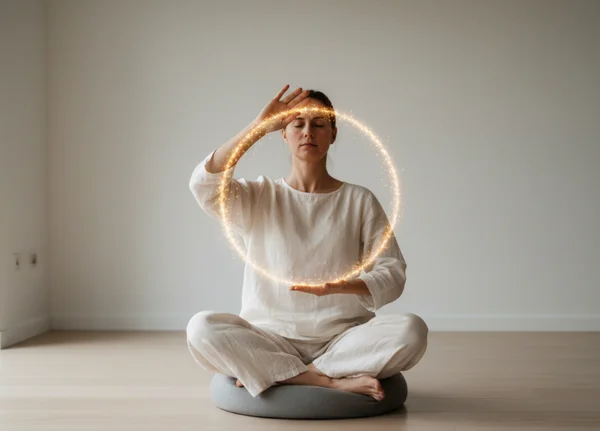
- Visualize a Shield: Before entering a stressful situation, imagine yourself surrounded by a bubble of protective light. Set the intention that only love and positive energy can enter.
- Learn to Say "No": You do not have to be available to everyone all the time. Practice saying, "I'm not able to right now" or "Let me get back to you" without feeling guilty.
- Schedule Alone Time: Treat your recharge time as a non-negotiable appointment. Put it in your calendar and honor it.
When to Consider Professional Support: While these tools are powerful for self-management, if you consistently feel overwhelmed, anxious, or depressed, it is important to seek help from a qualified mental health professional. An empath's journey is one of self-awareness, and a therapist can provide a safe space to explore these experiences.
Embracing Your Empath Type as a Strength
Discovering you are an empath, and even identifying with specific types of empaths, is not about finding a new label to carry. Instead, it is about receiving a map to your inner world. For years, you may have felt that your sensitivity was a burden. Now, you can begin to see it as a powerful source of intuition, compassion, and connection. By understanding your unique energetic makeup and learning to protect your energy, you can turn what once felt like a vulnerability into your greatest strength. As you move forward, a great next step is to try the comprehensive Empathy Test to deepen your self-awareness.
Frequently Asked Questions
What is the difference between an empath and a Highly Sensitive Person (HSP)?
While there is significant overlap, they are not the same. An HSP has a highly sensitive nervous system, making them more reactive to external stimuli (sights, sounds, emotions). An empath not only senses these things but also absorbs the energy and emotions of others. Most empaths are HSPs, but not all HSPs are empaths.
Do empaths feel others' physical pain?
Yes, this is a key trait of a Physical or Medical Empath. They can absorb the physical symptoms of others, experiencing them as if they were their own. This can range from headaches and stomachaches to chronic pain.
What are some good careers or jobs for empaths?
Empaths often thrive in roles where their compassion and intuition are assets. Good careers include counselors, healers, artists, writers, veterinarians, and roles in non-profit organizations. The key is finding a work environment that is not energetically draining.
What drains an empath's energy the most?
The most common energy drains for an empath are prolonged exposure to crowds, negative or inauthentic people, and emotional turmoil. Taking on too much of others' "stuff" without discharging it leads to exhaustion and burnout. Regular grounding and alone time are essential.