Am I an Empath or Just Sensitive? A Practical Guide
If you often leave conversations carrying more emotion than you expected, you may wonder, "am I an empath or just sensitive?" The honest answer is usually more nuanced than a label. You may be a highly sensitive person, you may relate to the word empath, you may simply have strong empathy, or you may be responding to stress, burnout, or past experiences. A calm self-check can help you notice patterns without turning them into a clinical label. For an educational starting point, the free empathy self-reflection tool can help you review empathy traits while keeping the focus on insight rather than certainty.

The Short Answer: Sensitivity Is About Processing, Empathy Is About Connection
Sensitivity usually describes how strongly your nervous system responds to input. That input may be sensory, emotional, social, or environmental. A highly sensitive person may notice bright lights, background noise, tension in a room, criticism, time pressure, or subtle changes in tone more intensely than other people seem to.
Empathy is different. It is the ability to understand, share, or respond to another person's emotional state. Many sensitive people are empathetic, but sensitivity and empathy are not identical. You can be sensitive to noise and crowds without strongly absorbing other people's moods. You can also have strong empathy without being overwhelmed by sensory input.
The word empath is a popular identity rather than a formal medical category. People who use it often mean that other people's emotions feel unusually vivid, close, or hard to separate from their own. That can be meaningful language for self-understanding, but it works best when used gently: as a reflection prompt, not as a final verdict.
Highly Sensitive Person vs Empath: The Core Difference
A highly sensitive person tends to process stimulation deeply. This can include sensory input, emotional cues, social expectations, beauty, conflict, and change. HSP traits often show up as needing quiet recovery time, feeling rattled after busy environments, noticing details others miss, and having a rich inner life.
An empath, in everyday language, is usually someone who feels especially tuned in to other people's inner states. The main clue is not only that you feel deeply, but that other people's feelings seem to enter your own system. You might walk into a tense room and feel heavy before anyone speaks. You might comfort a friend and later realize you are carrying their sadness long after the conversation ended.
Here is a useful comparison:
| Question | More HSP-Like Pattern | More Empath-Like Pattern |
|---|---|---|
| What overwhelms you first? | Noise, light, crowds, pace, conflict, clutter | Other people's moods, distress, tension, needs |
| What helps most? | Quiet, reduced stimulation, predictable routines | Emotional boundaries, grounding, separating your feelings from theirs |
| What do you notice quickly? | Details, tone shifts, sensory changes, social nuance | Emotional undercurrents, unspoken distress, relational tension |
| What drains you? | Too much input without recovery | Too much emotional contact without boundaries |
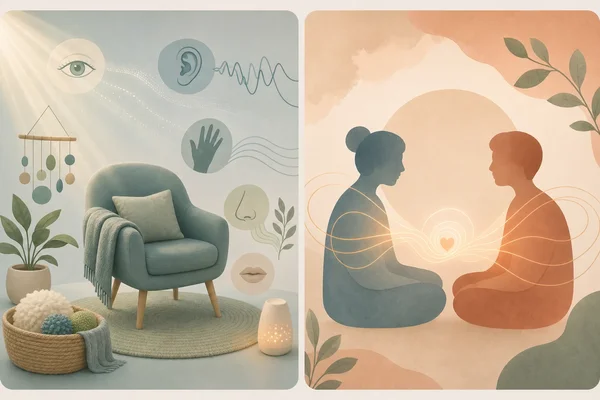
You may relate to both columns. Many people do. The point is not to force a single identity, but to notice which pattern explains your day-to-day experience most accurately.
Signs You May Be a Highly Sensitive Person
You may be closer to the highly sensitive person pattern if your strongest challenge is overstimulation. A loud restaurant, a crowded commute, an intense workday, or a fast-moving social event may leave you depleted even if nothing emotionally dramatic happened.
Common HSP-style clues include:
- You need alone time after busy environments.
- You notice small shifts in voice, lighting, texture, or mood.
- You are deeply moved by music, art, nature, or meaningful conversation.
- You dislike harsh criticism, rushed decisions, or chaotic spaces.
- You may replay interactions because you process them deeply.
- You can be empathetic, but your overload is not always tied to another person's emotions.
This pattern is not weakness. It often comes with careful observation, creativity, conscientiousness, and emotional depth. The challenge is learning how much stimulation your system can comfortably hold.
Signs You May Relate More to Being an Empath
You may relate more to the empath pattern if emotional boundaries are the main issue. The question is less "do I feel a lot?" and more "do I have trouble knowing what belongs to me?"
Empath-like clues include:
- You feel emotionally changed after being around upset people.
- You can sense tension before anyone names it.
- You often become the listener, helper, mediator, or emotional container.
- You may feel guilt when you set limits, even when you need rest.
- Other people's pain can feel physically or emotionally present in your own body.
- You sometimes need to ask, "Is this my feeling, or did I pick it up from someone else?"
This is where empathic sensitivity can become both meaningful and tiring. Strong attunement can support kindness and connection, but without boundaries it may slide into exhaustion, resentment, or over-responsibility.
Empathy vs Empath: Why the Words Matter
Empathy is a human capacity. It can include cognitive empathy, which helps you understand another person's perspective; emotional empathy, which lets you feel with someone; and compassionate empathy, which moves you toward helpful action.
An empath is a self-description some people use when those empathic experiences feel unusually intense. The difference matters because you do not need to identify as an empath to have deep empathy. You also do not need to treat every strong feeling as proof that you are absorbing someone else's emotion.
For SEO searches like "empathy vs empath," the cleanest distinction is this: empathy is the ability or process, while empath is an identity label. Labels can be useful when they help you choose better habits. They become less useful when they make you feel trapped, special in a burdensome way, or responsible for managing everyone else's emotional life.
A Gentle Self-Check Before You Choose a Label
Instead of asking for a yes-or-no verdict, try a pattern-based reflection. You can also use an educational empathy test as one input, as long as you treat the result as a reflection point rather than a complete explanation of your personality.
Ask yourself:
- What drains me first: sensory stimulation, emotional contact, or both?
- When I leave a stressful interaction, do I mainly need quiet, clarity, reassurance, or distance?
- Do I know what I felt before I entered the room, or do my emotions quickly blend with others?
- Do I over-help because I care, because I feel guilty, or because someone pressures me?
- Do I feel more balanced when I reduce input, set emotional boundaries, or name my own needs?
If reducing noise, pace, and stimulation helps most, the HSP frame may explain a lot. If separating your feelings from other people's feelings helps most, the empath frame may feel more accurate. If both help, you may simply need both sensory care and emotional boundaries.
When Sensitivity May Be Stress, Trauma, or Burnout
Not every intense reaction is an identity trait. Sometimes people become highly alert because they have been under long-term stress, spent time in unpredictable relationships, or learned to monitor other people's moods for safety. Searches such as "highly sensitive empath and narcissistic abuse" often come from people trying to understand why they feel hyper-aware around certain partners, family members, or authority figures.
If manipulation, coercion, emotional intimidation, or ongoing fear is part of your story, the priority is not proving whether you are an empath. The priority is support, safety, and clarity. Sensitivity can make harmful dynamics feel even more overwhelming, but a harmful dynamic is not your fault because you are sensitive.
It may help to speak with a qualified mental health professional if your sensitivity comes with panic, persistent low mood, intrusive memories, fear of setting limits, or feeling unsafe. An online article or quiz can support reflection, but it cannot replace personal care from someone trained to help with trauma, anxiety, relationship harm, or crisis concerns.

What Is an Empath Disorder?
"Empath disorder" is a common search phrase, but it is not a standard clinical category. Feeling highly empathetic, emotionally porous, or easily overwhelmed does not automatically mean something is wrong with you.
That said, some experiences that people describe as empathic can overlap with stress, anxiety, trauma responses, people-pleasing, codependency patterns, or difficulty with boundaries. The safer question is not "what disorder is this?" but "what pattern is affecting my daily life, relationships, and wellbeing?"
If the pattern causes distress, disrupts sleep, affects work, makes relationships feel unsafe, or leaves you unable to care for yourself, professional support can be a wise next step. You do not need a dramatic label to deserve help.
Practical Ways to Care for Sensitive or Empathic Traits
Whether you identify as sensitive, empathic, both, or neither, the practical skills are similar. The goal is not to become less caring. The goal is to stay connected without losing your own center.
Try these simple habits:
- Name your state before and after emotional conversations: "I felt calm before; now I feel tense."
- Use sensory recovery after high-input days: dim lights, quiet music, a walk, or screen-free time.
- Set small boundaries early: "I can talk for twenty minutes, then I need to rest."
- Pause before helping: "Is this mine to fix, or mine to care about from a healthy distance?"
- Build a body-based reset: slow breathing, feet on the floor, stretching, or cold water on your hands.
- Keep one relationship where you do not have to be the helper.

These habits work because they separate awareness from absorption. You can notice a feeling without carrying it. You can care about a person without becoming responsible for their entire emotional world.
A Gentle Next Step for Understanding Your Sensitivity
If you are still asking "am I an empath or just sensitive," consider replacing the question with a more useful one: "What kind of care helps my system feel clear, kind, and steady?" A label can be comforting, but your daily patterns will teach you more than any single word.
You might be a highly sensitive person who needs better sensory pacing. You might identify as an empath and need stronger emotional boundaries. You might be recovering from stress and need support that helps your body feel safe again. You might simply be a thoughtful person with strong empathy who is learning how to stay grounded.
For a structured but low-pressure reflection, you can explore your empathy patterns and compare the result with your real-life experiences. Use any score as a starting point for awareness, not as a fixed identity.
FAQ
How do you know if you are a highly sensitive person or empath?
Look at what overwhelms you first. If sensory input, pace, conflict, or busy environments drain you most, the highly sensitive person frame may fit. If other people's emotions feel hard to separate from your own, the empath frame may fit. Many people relate to both.
Am I an HSP or empath quiz results enough to decide?
A quiz can organize your reflections, but it should not be the only factor. Compare your result with daily patterns, feedback from trusted people, and what actually helps you feel balanced. Use quizzes as educational tools, not final labels.
What is the rarest type of empath?
There is no reliable universal ranking of empath types. Many lists mention emotional, physical, intuitive, animal, plant, earth, or dream empaths, but these are popular self-description categories rather than measured clinical groups. It is more useful to notice which experiences affect your life.
What are the 7 types of empaths?
Different writers use different lists. A common popular set includes emotional, physical, intuitive, dream, animal, plant, and earth empaths. These categories can be interesting for reflection, but they are not fixed scientific classifications.
Is HSP just autistic?
No. Highly sensitive person and autism are not the same thing. Some experiences can overlap, such as sensory sensitivity or social fatigue, but autism is a neurodevelopmental profile with broader features. If you are wondering about autism, consider seeking assessment from a qualified professional rather than relying on HSP or empath language alone.
Can someone be sensitive without being an empath?
Yes. A person can be highly responsive to noise, light, criticism, beauty, or change without strongly absorbing other people's emotions. Sensitivity is a broad processing pattern; empathic identity is more specifically about emotional attunement and absorption.
Can an empath stop absorbing other people's emotions?
Many people can reduce emotional absorption with boundaries, grounding, recovery time, and clearer responsibility lines. The aim is not to stop caring. The aim is to notice what belongs to you, what belongs to someone else, and what support you can offer without abandoning yourself.