Digital Empathy: Connecting Through Screens
In today's hyper-connected world, we are more digitally linked than ever before. We send hundreds of messages a day, attend virtual meetings, and maintain friendships across continents. Yet, despite this constant stream of data, many of us feel a growing sense of disconnect. Have you ever felt that your online relationships lack the warmth of real-life ones? Why does it feel so hard to stay truly connected through a screen?
Digital communication has changed how we share feelings. For many of us, text messages, emails, and video calls now replace face-to-face interactions. This shift leaves many people wondering how to express care when they cannot see a person's immediate reaction. This article explores the unique challenges of digital empathy and provides practical strategies for building meaningful connections online. To see how your own skills measure up in this new era, you can take the test to discover your current baseline.
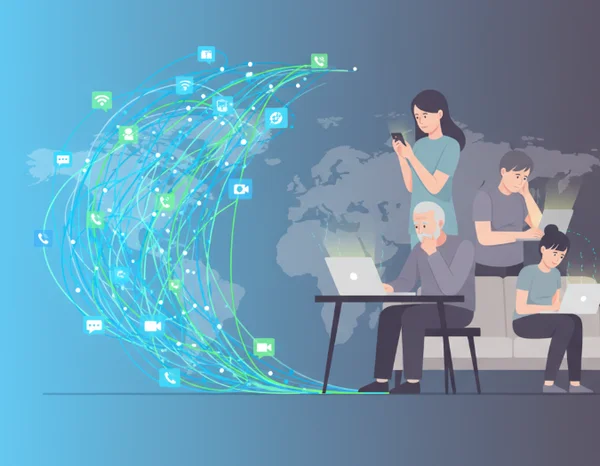
By understanding the mechanics of "digital age empathy," you can transform your online interactions from superficial exchanges into supportive, lasting bonds. Whether you are texting a friend or emailing a colleague, the goal remains the same. You want to be heard, and you want to make others feel seen.
The Science of Digital Empathy: Why Text Falls Short
To understand why we struggle online, we must first look at the science of digital empathy. For thousands of years, humans evolved to communicate in person. Our brains are highly tuned to pick up on micro-expressions and shifts in posture. We naturally sense the subtle "vibe" of a room. When we move these interactions to a digital space, we lose much of the data our brains need to process emotions effectively.
How Digital Communication Removes Emotional Cues
Text-based communication lacks the nonverbal cues that make up over half of our emotional expression. When you speak to someone in person, you hear their tone of voice. You see their facial expressions. These cues tell you if a "fine" means someone is actually happy or if they are struggling. Without these visual and auditory signals, our messages can easily be misinterpreted.
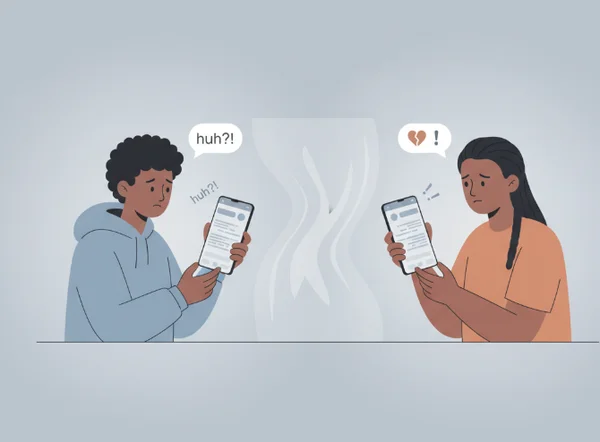
This loss of information creates "empathy barriers." In digital settings, we focus only on the literal words. We miss the hesitation in a voice or the sadness in someone's eyes. Because our brains are missing these vital clues, we often fill in the blanks with our own biases or moods. If you are having a bad day, you might read a neutral text as being angry or dismissive.
The Psychology Behind Misunderstood Messages
Research shows that digital communication activates different neural pathways than face-to-face interaction. Psychologists have identified something called "empathy gaps." These are moments where we struggle to accurately interpret the emotional state of others because of the medium we are using. In person, our mirror neurons help us "feel" what the other person is feeling. Online, those neurons do not fire with the same intensity.
The absence of immediate feedback is a major factor here. In a physical conversation, you can adjust your words the second you see someone look confused or hurt. In a digital thread, you might send a message and not see the impact for hours. This delay makes it harder to stay in sync with another person's emotional reality. To bridge this gap, many people find it helpful to start your test to learn more about their own emotional processing style.
Practical Strategies for Digital Empathy
Even with these challenges, you can still show deep empathy online. It simply requires more conscious effort. We have to learn new online empathy skills to replace what we lose when we aren't in the same room. By being intentional with our words and tools, we can create a "digital bridge" to the people we care about.
The Art of Empathetic Texting
Texting is perhaps the most common form of communication today. However, it is also the most prone to error. Empathy in texting requires brevity combined with emotional clarity. Because text is "flat," you must work harder to add dimension to your words.
A great technique is asking clarifying questions before jumping to conclusions. Instead of assuming a brief reply means anger, ask: "I noticed your reply was brief. Is everything okay?"
Acknowledge emotions explicitly. Since you cannot show a supportive face, you must state your support in words. Phrases like "I can see how that would be frustrating" or "I'm so happy for you" go a long way. Additionally, use emojis thoughtfully. While some consider them unprofessional, emojis serve as the body language of the digital age. They provide the tone that the alphabet cannot.
Video Calls: Bringing Faces Back to Digital Communication
Video calls are the closest thing we have to face-to-face interaction. They restore the visual cues that are crucial for deep connection. However, "Zoom fatigue" is real. This exhaustion can actually drain our empathy if we aren't careful. To make video calls more empathetic, try to maintain eye contact with the camera rather than just looking at the screen. This makes the person on the other end feel like you are truly looking at them.
Be mindful of your background and appearance. This is not about vanity, but about showing respect for the conversation. Minimize distractions so you aren't looking away at other tabs on your computer. When you show that you are fully present, you create a safe space for others to share. If you want to see how your video presence impacts others, you can see your results through a professional assessment.
Email Empathy: Balancing Professionalism and Compassion
In professional settings, email often replaces direct conversation. It is easy to become cold or overly formal in an inbox. However, maintaining empathy in business communication is vital for team morale and leadership. Start your emails with a brief, genuine check-in. A simple "I hope your week is going well" can soften a list of demands.
When delivering criticism or difficult news via email, read it back from the recipient’s perspective. Does it sound harsh? Could a neutral sentence be read as a personal attack? Balancing professionalism with compassion means setting clear boundaries while still acknowledging the human being on the other side. Learning these empathy tools can significantly improve your workplace relationships.
Interpreting Digital Communication with Empathy
Empathy is not just about what you send. It is also about how you receive information. Being an empathetic "digital listener" is a skill that takes practice. It involves slowing down and resisting the urge to react instantly to every notification.
Reading Between the Lines: Detecting Emotion in Text
Developing the ability to detect emotional subtext is a key part of virtual relationships empathy. Look for patterns in word choice and message structure. Does a friend who usually uses many emojis suddenly stop? Does a colleague who is usually quick to reply suddenly take three days? These changes often indicate underlying emotions like stress, sadness, or burnout.
Pay attention to response timing. While we shouldn't be "slaves" to our phones, understanding a long silence is helpful. It might mean someone is overwhelmed rather than ignoring you. This realization is an act of empathy. By "reading between the lines," you can offer support before the other person even has to ask for it.
Giving Others the Benefit of the Digital Doubt
Because digital communication is so prone to misinterpretation, the most empathetic thing you can do is assume positive intent. This is a core part of digital age empathy. If a message sounds rude, pause and ask yourself if they could just be in a rush. Consider if it is possible you are misreading their tone.
Before reacting with anger or defensiveness, seek clarification. Use phrases like, "I want to make sure I understand what you meant" or "I might be misinterpreting this, but..." This simple habit prevents unnecessary conflicts. It keeps the lines of communication open. When you give others the benefit of the digital doubt, you foster a culture of trust and safety in your online circles.
Building Your Digital Empathy Toolkit
Developing digital empathy isn't just about being "nicer" on social media. It is about creating authentic connections that transcend physical distance. By understanding the science behind why we struggle and implementing practical strategies, you can bridge the gap created by our screens.
Here are three powerful ways to strengthen your digital empathy:
-
Be Intentional: Use explicit emotional language to replace missing nonverbal cues.
-
Be Patient: Assume positive intent and give others the benefit of the doubt.
-
Be Present: Use tools like video calls to restore the "human" element of communication.
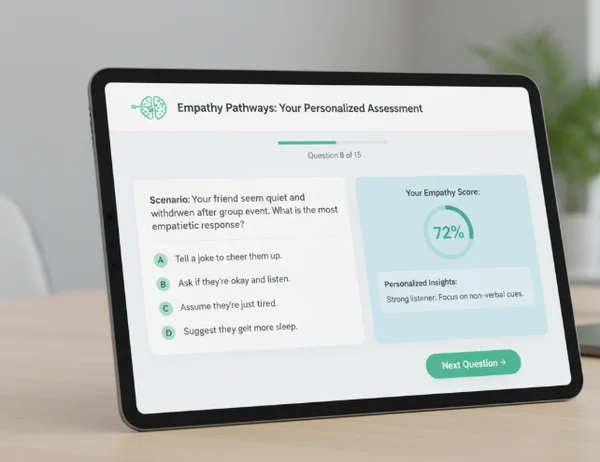
Want to better understand your natural empathy strengths and areas for growth? You can use this tool to discover your empathy score. Our comprehensive test provides personalized insights on how to enhance your communication skills in all contexts. Start building better relationships today by understanding how you relate to the world around you.
The Takeaway
You probably have questions about how to apply these concepts in real life. Let's address some common questions about digital empathy.
Can you really develop empathy through digital communication?
Yes, digital empathy can be developed and strengthened with practice. While the medium makes it harder to pick up on cues, you can compensate by being more verbal about your feelings. You can also ask more questions. Like any muscle, your empathy grows stronger when you consciously use it. Many users take our test to track their progress over time.
How can I show empathy when I disagree with someone online?
The key is to validate the other person's feelings without necessarily agreeing with their facts. You can say, "I hear how important this is to you," or "I understand why you feel frustrated." By acknowledging their emotional reality, you keep the relationship intact even when your opinions differ.
What digital communication tools are best for showing empathy?
Video calls are generally the best tool because they provide facial expressions and tone. However, for daily interactions, messaging apps that support voice notes are very effective. Voice notes allow the recipient to hear your true tone. This eliminates much of the guesswork found in plain text.
How do I know if my digital empathy efforts are working?
Look for signs of "emotional safety" in your digital relationships. Do people feel comfortable opening up to you? Are there fewer misunderstandings and "texting fights"? If your friends and colleagues respond positively and feel heard, your efforts are making a real impact. You can always start your test again in a few months to see if your self-awareness has improved.