Empathy Test Myths Debunked: 7 False Beliefs About Self-Assessment
Many people want deeper relationships but feel stuck. They often wonder why they can't connect with others on a profound level. Have you ever felt like you just don't understand what someone else is going through? This common struggle usually boils down to emotional intelligence. Specifically, it involves how we measure and understand our own empathy.
The journey to better self-awareness often begins with a professional empathy test. However, many avoid these tools because of common myths. These false beliefs act as barriers, preventing you from reaching your full potential. By debunking these myths, you’ll see empathy as a skill you can master rather than a mystery you’re born with.
In this article, we’ll look at the seven most common myths about empathy testing. We’ll explain the science behind why these beliefs are wrong and how you can use an empathy test to transform your life. Understanding the truth helps you build stronger bonds and lead with more compassion.
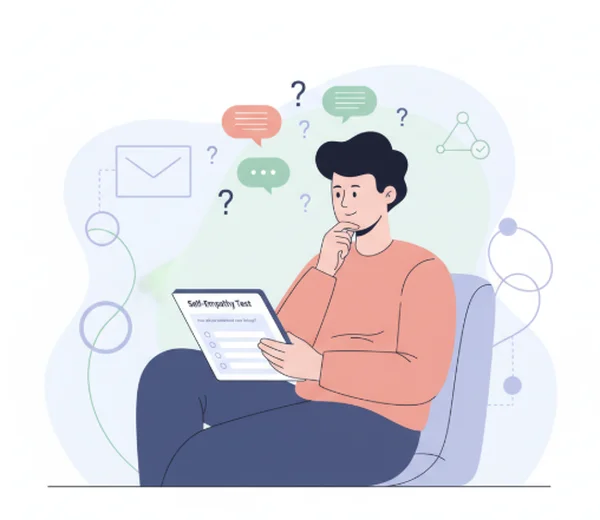
Myth #1: Empathy is Fixed at Birth - You're Either Born With It or Not
One of the biggest misconceptions is that empathy is a permanent trait. People often think they are either a "natural empath" or someone who is "cold-hearted." This "nature versus nurture" debate has been studied by scientists for decades. The truth is much more encouraging than most people realize.
The Neuroscience of Neuroplasticity and Empathy Development
Our brains aren’t set in stone. Neuroplasticity lets them evolve throughout life. Active listening or perspective-taking literally rewires your brain—meaning even if empathy feels weak now, targeted practice strengthens it, as retest scores prove. Research shows that the brain regions responsible for emotional regulation and understanding others can grow stronger with use.
Empathy is like a muscle. If you don't use it, it may feel weak. But with the right exercises, you can make it much stronger. This means that even if you feel you currently lack empathy, you have the biological capacity to develop it.
How Empathy Test Scores Change Over Time with Practice
Because the brain can change, your score on an assessment isn't a life sentence. Many users find that when they take a test, practice specific social skills, and then retake it months later, their scores improve. Tracking these changes is a great way to stay motivated.
By using an online tool, you can establish a baseline. Once you know where you stand, you can work on specific areas like cognitive empathy or emotional resonance. Seeing your progress in black and white proves that growth is always possible.
Myth #2: Empathy Tests Are Just Pop Psychology Without Scientific Basis
In the age of social media, it's easy to confuse a fun "personality quiz" with a legitimate psychological tool. Some believe that an empathy test is just a collection of random questions with no real meaning. This skepticism often prevents people from seeking valuable insights.
The Psychological Frameworks Behind Modern Empathy Assessment
Reliable empathy assessments are built on decades of academic research. For instance, Toronto Empathy Questionnaire research shows that structured assessments provide a consistent measure of emotional responsiveness. These frameworks break empathy down into measurable parts, moving beyond guesswork.
Psychologists look at how we process information and respond to the distress of others. These tests are designed to be "reliable" and "valid," meaning they consistently measure what they claim to measure. This is far from a social media quiz; it’s a structured look at your emotional processing.
How Our Test Measures Different Dimensions of Empathy
Our scientifically-validated empathy test uses a multi-dimensional approach. We don't just give you one flat score. We look at how you understand others intellectually and how you feel with them emotionally. Our system uses 60 carefully designed questions to provide a comprehensive view.
By analyzing different scenarios, we can see if you're better at "knowing" what someone feels or "feeling" what they feel. This scientific approach ensures that the feedback you receive is practical. You can start the test today to see this scientific framework in action.
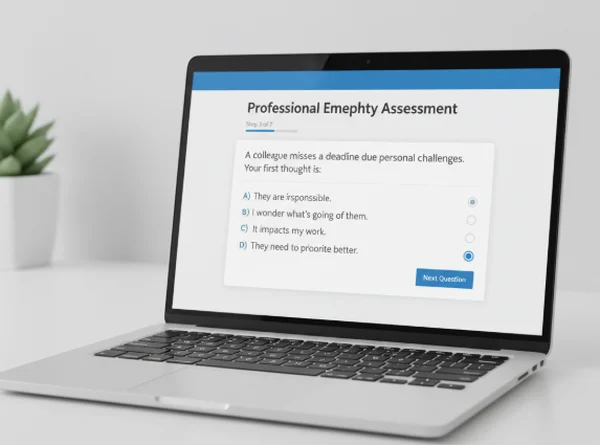
Myth #3: High Empathy Always Means Better Relationships and Success
There's a common belief that "more is always better" when it comes to empathy. People assume that the highest-scoring individuals have the best lives and strongest relationships. While empathy is a superpower, having it "turned up to ten" all the time can actually cause problems.
The Dark Side of Excessive Empathy: Boundaries and Burnout
If you feel everyone's pain as if it were your own, you may suffer from "empathy distress." This often leads to burnout, especially for people in caregiving roles. Without healthy boundaries, high empathy can make you feel overwhelmed and exhausted.
People with extremely high empathy might also struggle to make tough decisions. They may avoid giving necessary feedback because they don't want to hurt someone's feelings. This can actually hinder professional growth and lead to resentment in personal relationships.
Balanced Empathy: The Key to Sustainable Emotional Intelligence
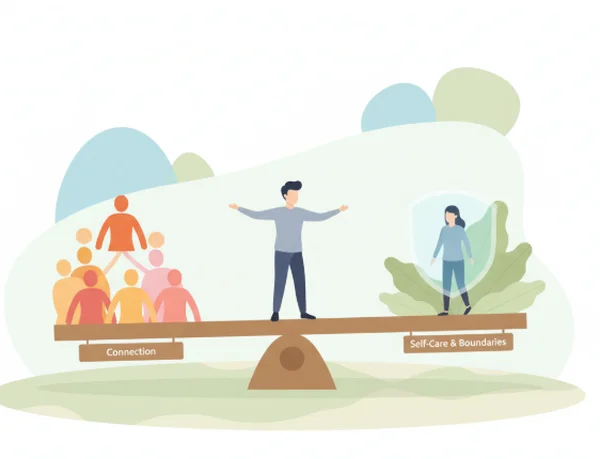
The goal isn't just to have "high" empathy, but to have "balanced" empathy. This means being able to connect with others while staying grounded in your own emotions. It’s about knowing when to lean in and when to protect your own mental energy.
A good assessment helps you identify if you're over-extending yourself. By understanding your tendencies, you can learn to set better boundaries. This balance is what leads to long-term success and healthy, lasting connections.
Myth #4: Empathy Tests Label You as "Deficient" (Why It’s False)
Fear of judgment is a major reason people avoid self-tests. They worry that a low score means they're a "bad person." This fear stems from a fixed mindset—the idea that our traits are moral judgments rather than skills.
Understanding Your Empathy Test Score as a Growth Map
We believe a score isn't a label; it’s a map. If you take a test and score lower than expected in "Cognitive Empathy," it doesn't mean you’re broken. It simply points to an area where you can focus your attention. Think of it like a GPS for your emotions telling you where to turn to reach your destination.
Most people have a mix of strengths and weaknesses. You might be great at feeling for your friends but struggle to understand the perspectives of people you disagree with. Identifying these gaps is the only way to fill them.
How Low Scores in Certain Areas Can Reveal Hidden Strengths
Sometimes, a lower score in emotional empathy indicates that you're very good at staying calm under pressure. This can be a huge asset in high-stress jobs like emergency medicine. A low score in one area often means your energy is being used effectively elsewhere.
By looking at your results objectively, you can learn to leverage your natural tendencies while rounding out your skills. You should test your empathy with a sense of curiosity rather than fear.
Myth #5: Empathy Tests Are Only for People Who Struggle with Relationships
Many people think, "My marriage is fine and I have friends, so I don't need a test." They assume that empathy assessments are only for "fixing" broken social lives. However, empathy isn't just about avoiding conflict; it’s about maximizing your potential.
Why Even Highly Empathic People Benefit from Self-Assessment
Even if you consider yourself a "people person," you likely have blind spots. High-empathy individuals can sometimes be "projectors." They assume they know what someone is feeling, but they might actually be projecting their own feelings onto the other person.
Self-assessment provides a mirror. It helps you see if your empathy is accurate or based on assumptions. Even the best athletes have coaches to help them find small areas for improvement. Empathy testing works the same way for your social skills.
Using Test Results to Fine-Tune Your Existing Empathy Skills
For professionals, fine-tuning empathy can lead to better leadership and higher sales. If you can understand the unspoken needs of a client, you become much more effective. Small adjustments in how you listen or respond can make a massive difference in your career trajectory.
Whether you're a CEO or a stay-at-home parent, there’s always room to deepen your connections. Using an online tool allows you to refine your approach and become even more influential in your community.
Myth #6: All Empathy Tests Measure the Same Thing
A quick social media quiz can’t compare to a professional assessment. Depth matters: superficial quizzes are like comparing bumper cars to cross-country vehicles. The quality and depth of the assessment you choose will dictate the value you get from it.
Understanding Different Types of Empathy Measured by Tests
There are actually three main types of empathy that researchers focus on:
- Cognitive Empathy: Understanding someone’s perspective or "knowing" their thoughts.
- Emotional Empathy: Actually "feeling" the emotions that another person is experiencing.
- Compassionate Empathy: Feeling moved to help based on your understanding.
Many basic quizzes only look at one of these. A truly helpful test measures all three to give you a complete picture of your social intelligence.
Why Our Test's Multi-Dimensional Approach Provides More Accurate Results
Our platform provides a detailed breakdown because "empathy" is a complex word. By using a multi-dimensional approach, we help you see exactly where your strengths lie. We provide an AI-driven report that offers personalized advice based on your unique profile.
Generic tests give generic results. We focus on providing specific, actionable insights that you can use in your daily life. To see the difference for yourself, you can get your results after completing our 60-question assessment.
Myth #7: Your Empathy Score Defines Your Identity and Potential
Some people take a test and think, "Well, I guess I'm just not an empathetic person," and they give up. They treat their score like it’s unchangeable. This is the "identity trap," and it’s the biggest obstacle to personal growth.
From Assessment to Action: Using Test Results as a Starting Point
An assessment is the beginning of the journey, not the end. Once you have your score, the real work starts. The value isn't in the number itself; it's in the actions you take afterward. If your score is low, you can start an empathy-building program. If it's high, you can learn how to manage it better.
Think of it like a blood pressure test. The test doesn't change your health, but it tells you if you need to adjust your lifestyle. Your empathy score is a health check for your emotional life.
Real Stories: How People Transformed Their Relationships Through Empathy Development
We’ve seen many users transform their lives by taking the results seriously. One manager discovered he was high in cognitive empathy but low in emotional empathy. By learning to express more warmth to his team, employee retention improved significantly.
Another user found that her "hyper-empathy" was causing her anxiety. By learning to set boundaries, she saved her marriage and regained her mental health. These stories show that the test is a tool for empowerment. You can discover your score and start your own transformation today.
Your Path to Authentic Emotional Intelligence Begins Here
Ultimately, empathy isn’t just a trait—it’s a journey. Each debunked myth shows how you can grow and adapt. Let these myth-busting insights reframe empathy as a skill you actively cultivate, not a genetic lottery.
Whether you're born with a natural talent or struggle to understand others, there's always a path forward. Don't let false beliefs stop you from reaching your potential. Knowledge is power, and knowing your current empathy level is the first step toward a more connected life.
Are you ready to see where you stand? Take the first step toward building stronger relationships and a more successful career. Visit our homepage and start your test now to receive your personalized empathy report.
Frequently Asked Questions About Empathy Tests
How accurate are online empathy tests compared to professional assessments?
While an online empathy test isn't a clinical diagnosis, our tool is based on validated psychological frameworks. It provides a highly reliable "snapshot" of your current skills. It's an excellent resource for self-reflection and personal development.
Can empathy really be improved, or is it primarily an innate trait?
Yes, empathy can absolutely be improved! Thanks to neuroplasticity, your brain can create new neural pathways as you practice new social habits. Just like learning a language, empathy is a skill that responds to consistent practice and intentional effort.
Are there any downsides to having too much empathy?
Yes. Having "too much" empathy without proper boundaries can lead to burnout. It can make it difficult to stay objective or make tough decisions. The goal of using an online assessment is to find a healthy balance where you can be caring without losing yourself.
How often should I retake the empathy test to track my progress?
We usually recommend retaking the test every 3 to 6 months. This gives you enough time to practice new behaviors and see how they influence your emotional processing. Tracking your scores over time is a great way to stay accountable to your goals.
Can my empathy test results help me understand specific relationship challenges?
Absolutely. Many relationship issues stem from a mismatch in how partners process empathy. By understanding your own profile, you can communicate your needs more clearly and understand why you might be reacting to your partner in certain ways.