High Emotional Quotient: Meaning, Signs, and Everyday Examples
A high emotional quotient is the ability to notice emotions, understand what they may mean, and choose a thoughtful response instead of being pushed around by the feeling of the moment. People often shorten emotional quotient to EQ, and use it almost interchangeably with emotional intelligence. In everyday life, high EQ shows up in how someone listens, handles stress, repairs conflict, and stays aware of other people's emotional cues.
That does not mean a high-EQ person is always calm, endlessly patient, or naturally gifted in every relationship. It means they have learned, or are learning, to combine self-awareness with social awareness. If you want a gentle starting point for reflection, EmpathyTest.me offers a free empathy and emotional intelligence self-reflection tool that can help you think about empathy, emotional awareness, and social connection without turning your score into a label.

What a High Emotional Quotient Means
High emotional quotient means you can recognize, interpret, and work with emotion in yourself and others. It includes emotional self-awareness, self-regulation, empathy, communication, and relationship management. A person with high emotional intelligence is likely to pause before reacting, ask better questions, and notice when a conversation has an emotional layer beneath the words.
The phrase can sound like a fixed score, but EQ is better understood as a set of learnable capacities. Someone may be strong at reading other people but weaker at naming their own needs. Another person may regulate stress well at work but struggle with repair after conflict at home. A high emotional quotient is not a permanent personality trophy; it is a pattern of skills that can keep developing.
It also does not mean suppressing emotion. In fact, emotionally intelligent people usually respect emotion as useful information. Anger may point to a boundary. Anxiety may point to uncertainty or preparation needs. Sadness may show that something mattered. The skill is not to erase those signals, but to understand them before deciding what to do next.
High EQ vs High IQ
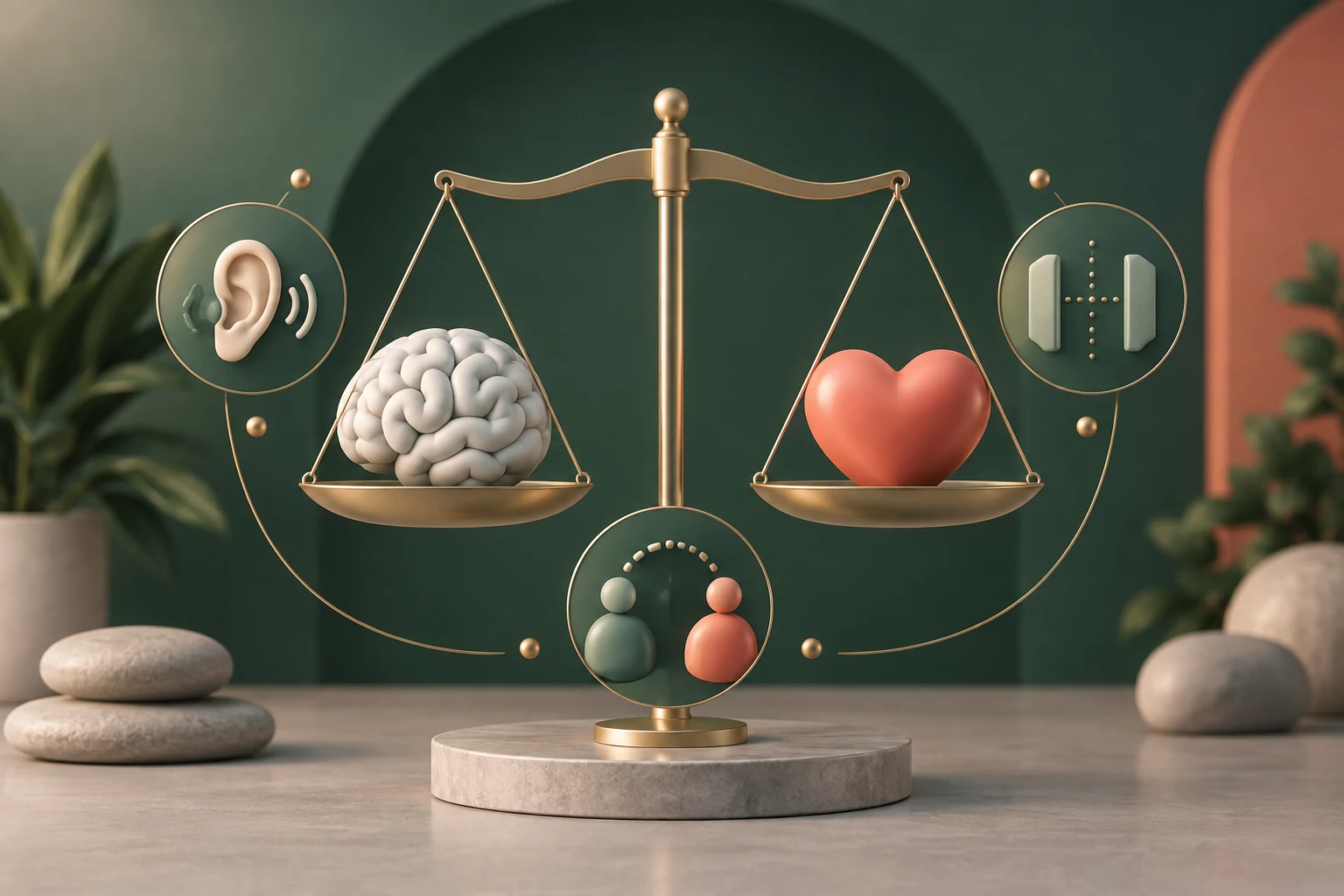
High EQ vs high IQ is a common comparison because the two phrases sound similar, but they describe different strengths. IQ is usually associated with reasoning, problem-solving, and cognitive ability. EQ is about how well someone understands and manages emotional information in real interactions.
High IQ can help a person analyze a problem quickly. High EQ can help them communicate that solution in a way other people can actually hear. High IQ may support technical learning. High EQ may support trust, collaboration, leadership, and conflict repair. In many parts of life, the strongest results come when both are present: clear thinking plus emotional awareness.
The difference matters because intelligence alone does not always make a person easy to work with, safe to confide in, or steady under pressure. A brilliant person may still become defensive, miss social cues, or dismiss feelings as irrelevant. On the other hand, a highly emotionally intelligent person may not know every answer, but they often create the conditions where people can think, speak, and solve problems together.
High Emotional Quotient Characteristics
The most useful signs of a high emotional quotient are practical and observable. They are less about sounding impressive and more about what someone does when emotion enters the room.
First, high-EQ people can name feelings with some precision. Instead of saying only "I'm fine" or "I'm stressed," they can tell the difference between disappointed, embarrassed, overwhelmed, resentful, or uncertain. That vocabulary gives them more choices.
Second, they listen for meaning, not just facts. They notice tone, hesitation, facial expression, and context. They may ask, "Do you want advice, or do you want me to understand what happened?" That kind of question often prevents accidental pressure.
Third, they can stay curious during disagreement. Curiosity does not mean accepting bad behavior or abandoning boundaries. It means they try to understand what is happening before they judge the whole person. They can say, "I see this differently, but I want to understand why it landed that way for you."
Fourth, they repair. A person with high emotional intelligence can apologize without turning the apology into a debate. They can also receive feedback without immediately attacking the messenger. Repair is one of the clearest high emotional intelligence examples because it shows humility, accountability, and care in the same moment.
Finally, high-EQ people tend to have boundaries that protect connection instead of replacing it. They can be warm without overextending themselves, honest without being cruel, and helpful without taking responsibility for everyone else's feelings. If you are exploring these patterns in yourself, an empathy quotient based reflection tool can give you a structured way to think about empathy traits and social awareness.

High Emotional Intelligence in Relationships
High emotional intelligence in relationships often looks simple from the outside: a pause before answering, a careful question, a willingness to admit impact, or the ability to notice when a partner, friend, child, or coworker is withdrawing. These small moves can change the direction of a conversation.
In close relationships, high EQ helps people separate emotion from accusation. Instead of "You never listen," a more emotionally intelligent response might be, "I felt dismissed when I was interrupted, and I want to finish the thought." The second sentence is still honest, but it gives the other person a clearer path back into connection.
High EQ also supports empathy without self-erasure. Someone can understand another person's pain and still hold a limit. They can say, "I care about what you are going through, and I cannot have this conversation while we are yelling." That balance is important because emotional intelligence is not people-pleasing. It is the ability to stay connected to both your own experience and the other person's humanity.
This is why signs of emotional intelligence in a woman, a man, a leader, or a friend are usually not separate categories at the core. Cultural expectations may shape how people are allowed to express emotion, but the underlying skills are similar: awareness, regulation, empathy, communication, and repair.
Is High Emotional Intelligence Good or Bad?
High emotional intelligence is generally useful, but it is not automatically good in every situation. Like any human skill, it depends on values, boundaries, and how the skill is used.
The healthy version of high EQ helps people understand emotions, reduce unnecessary conflict, and respond with care. It can make relationships feel safer because people are less likely to be punished for having normal feelings. It can also improve teamwork because emotionally aware people often notice tension early and address it before it becomes harder to untangle.
The unhealthy version appears when emotional insight becomes over-responsibility or manipulation. Some people are so tuned in to others that they ignore their own needs, absorb everyone else's mood, or feel responsible for fixing every interaction. Others may understand emotions well but use that insight to control a conversation. That is not mature emotional intelligence; it is emotional skill without enough respect.
Balanced EQ includes ethics and boundaries. It asks, "Can I understand what is happening emotionally?" but also, "Am I acting with honesty, consent, and care?" High emotional quotient is most valuable when it supports clarity and connection, not performance or control.
How to Develop a Higher Emotional Quotient
You can build emotional intelligence by practicing small skills consistently. The first step is emotional labeling. When a feeling appears, try naming it more specifically than "good" or "bad." Ask yourself: Is this irritation, disappointment, shame, fatigue, fear, excitement, or pressure? The more precise the label, the easier it becomes to choose a useful response.
The second step is pausing. A pause does not need to be dramatic. One breath, a sip of water, or a sentence such as "Let me think before I answer" can interrupt an automatic reaction. This is especially useful when you feel criticized or misunderstood.
The third step is checking assumptions. High EQ grows when you stop treating your first interpretation as the only possible truth. "They ignored me" might become "They may be distracted, upset, or unsure what to say." You still get to decide what behavior is acceptable, but you make that decision with more information.
The fourth step is practicing repair. If you were sharp, vague, dismissive, or defensive, try a short repair sentence: "I did not handle that well. What I meant was..." or "I can see how that affected you. Let me try again." Repair builds trust because it shows that connection matters more than looking flawless.
The fifth step is reflecting after real interactions. What emotion did you notice first? What did you miss? What helped the conversation? What would you try differently next time? These questions turn daily life into emotional intelligence training without making it feel like homework.
Use High EQ as a Starting Point for Reflection
A high emotional quotient can make life feel more understandable, but it should not become another way to judge yourself or other people. EQ is not a moral ranking. It is a language for noticing patterns: how you handle stress, how you listen, how you set limits, and how you repair moments that go sideways.
If you recognize several high-EQ traits in yourself, use that awareness with humility. Keep practicing the parts that are harder, especially boundaries and honest repair. If you feel less confident about your emotional awareness, that does not make you broken. It gives you a specific growth area.
For a structured, low-pressure next step, you can review your patterns with an educational empathy assessment. Treat the result as a reflection prompt, not a fixed identity. If emotional distress, relationship conflict, or mental health concerns are significantly affecting your life, consider speaking with a qualified professional who can offer personalized support.
FAQ
What does high emotional quotient mean?
High emotional quotient means a person can understand and work with emotional information in themselves and others. It includes self-awareness, empathy, self-regulation, communication, and relationship repair. In plain language, high EQ helps someone notice what is happening emotionally and choose a more thoughtful response.
What kind of people have high EQ?
People with high EQ are often reflective, curious, emotionally honest, and socially aware. They may be good listeners, steady under pressure, and willing to repair mistakes. They are not perfect or emotionless; they simply tend to notice feelings earlier and respond with more care.
How can you tell if someone has high EQ?
Look at how they behave during stress, disagreement, feedback, and repair. High-EQ people usually pause before reacting, ask clarifying questions, respect boundaries, apologize when appropriate, and avoid turning every difficult feeling into someone else's fault.
What is the difference between high EQ and high IQ?
High IQ relates more to reasoning, learning, and problem-solving. High EQ relates more to emotional awareness, self-management, empathy, and relationship skills. A person can have one without the other, but many real-life situations benefit from both.
What are signs of emotional intelligence in a woman?
Signs of emotional intelligence in a woman are the same core skills seen in any emotionally intelligent person: naming emotions, listening well, setting boundaries, staying curious during conflict, showing empathy, and repairing harm. Gender expectations may affect how these skills are expressed, but the skills themselves are not gender-specific.
Which zodiac signs have high EQ?
Astrology can be entertaining, but it is not a reliable way to measure emotional intelligence. High EQ is better understood through observable skills such as empathy, self-awareness, communication, and repair. People of any zodiac sign can develop these abilities.
Is high emotional intelligence always good?
High emotional intelligence is usually helpful, but it works best when paired with boundaries and respect. Without boundaries, a person may overextend themselves. Without respect, emotional insight can be used to pressure others. Healthy high EQ supports honest connection, not control.