How Do You Know If You're an Empath? 11 Signs to Notice
If you have been wondering, "how do you know if your empath," you are probably asking a more personal question: why do other people's feelings seem to affect you so deeply? An empath is often described as someone who is strongly tuned in to the emotions, needs, and atmosphere around them. That can feel meaningful, useful, and sometimes exhausting. This guide will help you notice common patterns without turning them into a label you have to keep forever. If you want a structured starting point after reading, a free empathy self-reflection test can help you compare your impressions with a calmer set of questions.
What People Usually Mean by "Empath"
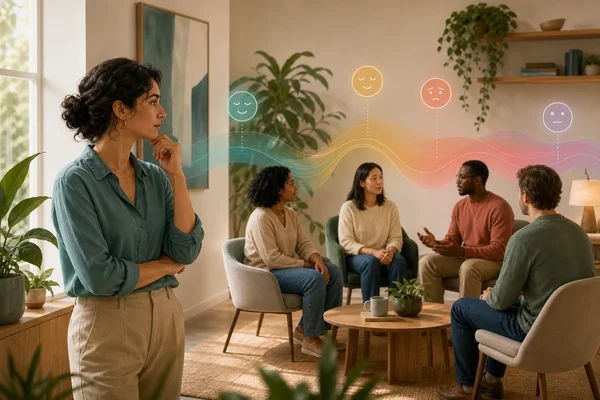
"Empath" is not a clinical label. In everyday language, it usually means a person who experiences empathy with unusual intensity. You may read emotional tone quickly, sense tension before anyone names it, or feel pulled to comfort people before you have checked whether you have energy to help.
It also helps to separate empathy from related ideas. Cognitive empathy is the ability to understand another person's perspective. Emotional empathy is the ability to feel with someone. Compassion adds the wish to respond in a helpful way. Many people who call themselves empaths notice all three, but one may be stronger than the others.
The goal is not to prove that you belong in a special category. A better goal is to understand your pattern: what you notice, what overwhelms you, what helps you connect, and what boundaries keep your empathy useful instead of draining.
11 Signs You Might Be an Empath
1. You Notice Emotional Shifts Before Others Do
You may walk into a room and sense that the mood has changed, even when everyone is acting polite. A friend's short text, a coworker's tone, or a pause in conversation may stand out to you quickly. This does not mean you are always right. It means your attention naturally tracks subtle social and emotional cues.
2. People Often Tell You Personal Things
Many empathic people become unofficial listeners. Friends, relatives, coworkers, and even people you barely know may open up because you seem patient and emotionally present. This can be a gift, but it can also become too much if you feel responsible for every person's pain.
3. Crowds or Busy Places Drain You
If you are highly sensitive to emotional tone, crowds can feel like too many signals at once. Noise, body language, facial expressions, and social tension may pile up until you feel tired or foggy. Needing quiet afterward does not automatically mean you dislike people. It may mean your nervous system needs fewer inputs for a while.
4. You Have Strong Reactions to Conflict
Conflict may feel intense because you are aware of several emotional layers at the same time: your own reaction, the other person's hurt, and the effect on the relationship. You might avoid hard conversations, smooth things over too quickly, or feel guilty even when you need to speak honestly.
5. You Struggle to Tell Which Feelings Are Yours
One of the clearest empathic patterns is emotional blending. After spending time with someone anxious, sad, angry, or excited, you may feel a similar emotion in your own body. The useful question is: "Was this feeling here before the interaction, or did it arrive with the room?"
6. You Care Deeply, Even When You Are Tired
Empathic people often want to help because they can imagine how another person feels. The risk is over-giving. You may say yes when you are depleted, answer messages at all hours, or feel selfish for needing rest. Caring is healthy; losing yourself in care is a sign to reset your boundaries.
7. You Pick Up on Body Language and Subtext
You may notice what is not being said: crossed arms, forced laughter, a change in eye contact, or a mismatch between words and tone. This can make you perceptive in relationships and work. It can also tempt you to over-read situations, so it helps to check your interpretation before acting on it.
8. Sensory Input Affects Your Mood
Some people who identify as empaths also report strong sensitivity to sounds, smells, textures, bright lights, or chaotic spaces. This overlap does not make you "too sensitive." It simply means emotional and sensory information may both register strongly for you.
9. You Need Solitude to Feel Like Yourself Again
Time alone may help you separate your own needs from everyone else's. That solitude might look like a walk, journaling, quiet music, a shower, or sitting without conversation. The important part is not isolation; it is recovery. Healthy solitude brings you back to yourself.
10. You Feel Deeply Moved by Stories, Art, or Suffering
Movies, books, music, news stories, or a stranger's difficult moment may affect you more than you expect. You might cry easily, feel heavy after distressing content, or need time to process what you watched or heard. This can reflect emotional openness, not weakness.
11. Boundaries Feel Unkind at First
If you are used to being available, a boundary may feel like rejection. But boundaries are not the opposite of empathy. They are what allow empathy to stay steady. Saying "I cannot talk tonight, but I care about you" is often more sustainable than listening until you are resentful.
A Grounded Self-Check You Can Try
If the signs above feel familiar, pause before deciding what they mean. A grounded self-check is more useful than a dramatic label. You can use the following questions in a journal or compare them with an empathy quotient style check-in if you prefer a structured format.
Ask yourself:
- Do I often notice other people's feelings before they name them?
- Do I feel emotionally tired after crowds, conflict, or intense conversations?
- Do I confuse another person's mood with my own?
- Do people rely on me as a listener more than I can comfortably handle?
- Do I recover when I have quiet time, nature, movement, or clear boundaries?
Look for patterns over time instead of one intense day. Stress, lack of sleep, grief, burnout, social anxiety, trauma history, and major life changes can all make emotional signals feel louder. That does not invalidate your experience, but it does mean the most accurate answer usually comes from repeated observation.

Spiritual, Gender, Zodiac, and Test Questions
Searches around this topic often include spiritual wording, gendered signs, zodiac signs, and quizzes. These angles can be meaningful to readers, but they need a grounded frame.
If you are asking how to know if you are an empath spiritually, you may be describing a sense of connection, intuition, or meaning. It is fine to use spiritual language if it helps you reflect, as long as it does not replace practical self-awareness. Notice what happens in daily life: Do you listen well? Do you feel overwhelmed by emotional intensity? Do you need clearer boundaries? Those questions are useful whether your framework is spiritual, psychological, or both.
Searches for signs of an empath woman or signs of an empath man can also be misleading. Men, women, and nonbinary people can all show empathy, sensitivity, intuition, and emotional overwhelm. Culture may affect how people express those traits. For example, some men may be taught to hide tenderness, while some women may be expected to provide emotional care. The underlying pattern matters more than the gender label.
Zodiac content can be fun, but it should not be treated as evidence that you are or are not empathic. Your habits, emotional awareness, listening style, and boundaries say more than your sign. Similarly, an empath test or quiz can be a helpful reflection tool, but it should not be treated as a final verdict on your personality.
When Empathy Feels Heavy
High empathy has strengths: warmth, careful listening, emotional insight, and the ability to notice needs that others miss. But the negative traits of an empath usually appear when sensitivity has no structure. You might become overly responsible, conflict-avoidant, exhausted, resentful, or drawn into one-sided relationships.
Try three simple resets:
- Name the feeling: "I am noticing sadness, but I need to check whether it is mine."
- Add a boundary: "I can listen for 15 minutes, then I need to rest."
- Choose one helpful action: "I can offer support, but I cannot solve the whole problem."
If your sensitivity comes with panic, long-lasting sadness, shutdown, intrusive memories, relationship fear, or difficulty functioning, consider talking with a qualified mental health professional. Support can help you build skills around emotional regulation, boundaries, and self-trust. Being empathic should not require you to suffer quietly.

What to Do Next If the Pattern Fits
So, how do you know if you're an empath in a way that is actually useful? You look for a repeated pattern of emotional attunement, deep feeling, social sensitivity, and the need for recovery. Then you ask what that pattern needs from you.
Try a one-week empathy log. Each day, note one moment when you felt strongly affected by someone else, what you did, and what helped you return to balance. At the end of the week, look for themes. You may find that certain environments, people, topics, or times of day affect you more than others.
If you want a low-pressure next step, you can explore a gentle empathy test and use the result as a reflection point. The most helpful outcome is not a perfect label. It is a clearer sense of how your empathy works, where it helps your relationships, and where it needs boundaries so you can stay well.
FAQ
How do I know if I am truly an empath?
You may be highly empathic if you repeatedly notice others' emotions, feel affected by conflict or crowds, attract people who need support, and need quiet time to recover. Treat the word "empath" as a reflection label, not a fixed identity you must prove.
Is an empath a disorder?
No. Being an empath is not a disorder. It is an everyday term people use for strong emotional attunement or high sensitivity. If empathy-related overwhelm affects sleep, work, relationships, or safety, it may be worth seeking professional support for the distress, not because empathy itself is a disorder.
Can men and women show empath signs differently?
Yes, expression can differ because of personality, upbringing, culture, and expectations. A woman might be expected to show care openly, while a man might express empathy through problem-solving, protection, or quiet loyalty. The core signs are not limited to any gender.
How do you know if you're an empath spiritually?
A spiritual empath framework often emphasizes intuition, energy, and deep connection. To keep it grounded, connect that language to observable life patterns: how you listen, how you react to emotional environments, how you recover, and whether your sensitivity helps or overwhelms you.
Which zodiacs are empaths?
Some astrology traditions associate water signs with emotional sensitivity, but zodiac signs are not reliable evidence of empathy. A person of any sign can be empathic. Your actual behavior, boundaries, listening skills, and emotional awareness matter more.
What are the 7 types of empaths?
Lists vary widely. Common categories include emotional, cognitive, physical, intuitive, environmental, animal, and plant or nature empaths. These are informal categories, not scientific boxes. Use them only if they help you describe your experience more clearly.
Do people with Parkinson's have empathy?
Yes, people with Parkinson's can have empathy. Some neurological or cognitive changes may affect emotional expression, facial reading, or social cognition for some people, but that does not mean a person lacks care. If this question is personal or medical, discuss changes with a qualified clinician.