How is Empathy Measured? Scales, EQ & Empathy Tests
The profound human capacity for empathy allows us to connect deeply with others, understand their perspectives, and share their feelings. It is the invisible thread that weaves together the fabric of our social lives. But how exactly do psychologists and researchers measure such a complex and often elusive trait? Is there a test for empaths? This article delves into the fascinating science behind empathy assessment, from foundational psychological questionnaires to the innovative AI-driven methods shaping today's online empathy test platforms. If you're ready to understand the science of connection, you're in the right place.
Understanding Empathy: What Are We Really Measuring?
Before we can measure something, we must first understand what it is. Empathy is a multifaceted concept that goes far beyond simply feeling sorry for someone. True measurement requires breaking it down into its core components, allowing for a more nuanced and accurate assessment of this essential human skill. It's a journey into the very heart of the psychology of empathy.
Defining Empathy: More Than Just Feeling
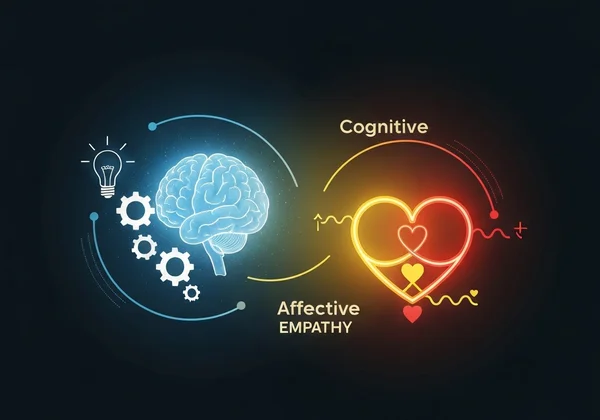
At its core, empathy is the ability to sense other people's emotions, coupled with the ability to imagine what someone else might be thinking or feeling. It's not the same as sympathy, which is a feeling of care and concern for someone. Psychologists generally divide empathy into two primary categories, both of which are crucial for a complete picture.
- Cognitive Empathy: Often described as "perspective-taking," this is the intellectual ability to understand another person's emotional state and what they might be thinking. It’s about seeing the world from their viewpoint without necessarily sharing their emotions. This skill is vital for effective communication, negotiation, and leadership.
- Affective Empathy: Also known as emotional empathy, this is the capacity to feel and share another person’s emotions. When a friend is overjoyed and you feel a surge of happiness for them, or when you wince watching someone get hurt, you are experiencing affective empathy. It's the engine of compassion and interpersonal connection.
A comprehensive empathy test must assess both of these dimensions to provide a truly accurate profile. To learn more about the different types of empathy and their nuances, you can delve deeper into our resources.
The Psychologist's Toolkit: Key Empathy Scales
For decades, researchers have developed and refined self-report questionnaires to quantify empathetic tendencies. These scales are the bedrock of empathy measurement and continue to influence how we understand this trait. They work by presenting a series of statements and asking individuals to rate how well each statement describes them.

The Interpersonal Reactivity Index (IRI)
Developed by Mark H. Davis in 1980, the IRI is one of the most widely used multidimensional measures. Instead of providing a single empathy score, it breaks the concept down into four distinct subscales:
- Perspective-Taking: Measures the tendency to adopt the psychological point of view of others (Cognitive Empathy).
- Fantasy: Taps into the tendency to transpose oneself imaginatively into the feelings and actions of fictitious characters in books, movies, and plays.
- Empathic Concern: Assesses "other-oriented" feelings of sympathy and compassion for unfortunate others (Affective Empathy).
- Personal Distress: Measures "self-oriented" feelings of personal anxiety and unease in tense interpersonal settings.
The Empathy Quotient (EQ)
Created by Simon Baron-Cohen and his team at the Autism Research Centre, the Empathy Quotient (EQ) is a 60-item questionnaire designed to measure empathy across the general population. It provides a single score and is particularly focused on identifying the degree to which a person recognizes and responds to the feelings of others. It has been instrumental in research related to autism spectrum conditions, where empathetic difficulties can be a core feature.
The Toronto Empathy Questionnaire (TEQ)
A more modern scale, the TEQ was developed by Spreng et al. to provide a simple, brief, and reliable measure. It views empathy primarily as an emotional process. The 16 items on this scale are mostly geared toward affective empathy, focusing on the immediate emotional connection with another person's state. Its brevity and strong psychometric properties make it a popular choice in many research studies.
Emotional Quotient (EQ) and Empathy: A Close Relationship
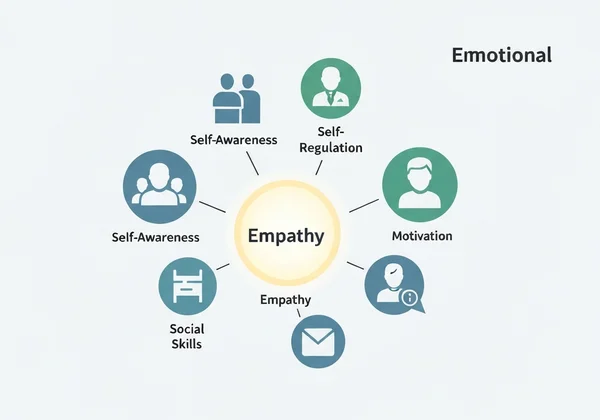
The term Emotional Quotient (or Emotional Intelligence) is often used interchangeably with empathy, but they are not the same. Emotional Intelligence is a broader concept that encompasses a wider range of skills. According to Daniel Goleman, a leading figure in the field, EQ has five key components:
- Self-Awareness: Understanding your own emotions.
- Self-Regulation: Managing your own emotions.
- Motivation: Using emotions to achieve goals.
- Empathy: Understanding and feeling the emotions of others.
- Social Skills: Managing relationships.
As you can see, empathy is a foundational component of overall Emotional Intelligence. You cannot be truly emotionally intelligent without a strong capacity for empathy. However, a person could have high affective empathy (feeling what others feel) but lack the self-regulation to manage those shared emotions, leading to burnout or distress. A well-designed empathy assessment focuses specifically on the empathy component, while a full EQ test would cover a wider array of emotional skills.
The Digital Age of Empathy Assessment
While classic scales provide a strong foundation, modern platforms have revolutionized how we measure empathy. An online empathy test often integrates principles from these established questionnaires with advanced technology to create a more dynamic and accessible experience.

These platforms move beyond simple self-report statements and incorporate scenario-based questions or situational judgment tests. For example, you might be presented with a short description of a social dilemma and asked to choose the most empathetic response. This method tests not just your self-perception but your ability to apply empathetic reasoning in a practical context.
Furthermore, advanced platforms can provide instant scoring and detailed feedback, breaking down your results into different components like cognitive and affective empathy. This allows you to gain a nuanced understanding of your strengths and identify areas for potential growth. For a deeper look into your own profile, you can take our comprehensive empathy test and get a personalized report.
Why Measuring Empathy Matters
Understanding your empathetic profile is more than just an academic exercise. It has profound implications for nearly every aspect of life.
In Personal Relationships
Empathy is the cornerstone of strong, healthy relationships. It allows partners, friends, and family members to feel heard, understood, and validated. A lack of empathy can lead to misunderstandings, conflict, and emotional distance. By understanding your own empathetic tendencies, you can work to become a more present and supportive figure in the lives of those you care about.
In the Workplace
In a professional setting, empathy is a key driver of effective leadership, teamwork, and customer relations. Empathetic leaders are better able to motivate their teams and foster a positive work environment. Empathetic colleagues collaborate more effectively, and sales or service professionals who can empathize with clients build stronger, more lasting loyalty.
In Society
On a broader scale, empathy is the social glue that encourages prosocial behavior, reduces prejudice, and inspires collective action to address societal problems. It is the driving force behind altruism and compassion, compelling us to help others even at a cost to ourselves.
Embarking on the journey to measure and understand your empathy is a powerful step toward personal growth and building a more connected world. When you're ready, you can discover your score and begin that journey today.