Hyper Empathy Syndrome: Why You Feel Too Much & How to Cope
Hyper empathy syndrome can make you feel other people’s moods before anyone says a word. You might walk into a room and suddenly feel a tight chest or a heavy sadness—then realize your partner or coworker is upset.
For many people, empathy means understanding how someone else feels. With hyper empathy, it can feel more like emotional absorption. That intensity can leave you drained, anxious, or unsure which feelings are actually yours. If this sounds familiar, you’re not crazy or too sensitive. You may be dealing with a real pattern that many people describe in therapy and self-reflection. If you want a quick baseline before we dive in, you can take our empathy test to see where you currently land. And then use this guide to understand the hyper empathy side of that experience.

What Is Hyper Empathy Syndrome
To understand hyper empathy syndrome, it helps to clarify what empathy is. Empathy isn’t one single skill—it’s a mix of noticing, interpreting, and emotionally responding to other people.
“Hyper” empathy usually points to intensity: your emotional response is so strong that it starts to affect your daily life, energy, or well-being.
It’s also important to note that hyper empathy syndrome is not a distinct medical diagnosis in the DSM-5 (Diagnostic and Statistical Manual of Mental Disorders). People often use the term to describe a cluster of experiences that can overlap with trauma responses, neurodivergence, or high sensitivity.
Cognitive vs. Affective Empathy: Knowing vs. Feeling
To understand why you feel overwhelmed, it helps to separate two types of empathy:
- Cognitive Empathy: You can understand someone else’s perspective. You know they are sad, but you don’t necessarily feel it in your body.
- Affective (Emotional) Empathy: You emotionally (and sometimes physically) feel what another person is feeling—like you “catch” their sadness.
People who describe hyper empathy often experience a very strong affective empathy response. You might not always know why someone is upset, but you can strongly feel that they are.
Is It a Disorder or a Personality Trait?
Because the word “syndrome” sounds clinical, many people worry something is “wrong.” In most cases, it’s better framed as a trait or pattern—and it becomes a problem mainly when you don’t have tools to manage it.
Think of it like having very sensitive hearing. Your ears aren’t “broken,” but noisy environments can be exhausting without protection. In a similar way, hyper empathy can require “emotional earplugs”: boundaries, grounding, and recovery time.
7 Key Signs You May Experience Hyper Empathy Symptoms
How do you know if you’re simply caring—or if your empathy has crossed into the “hyper” zone? Everyone is different, but these common signs can help you spot the pattern.
Here is a checklist of the most common signs:
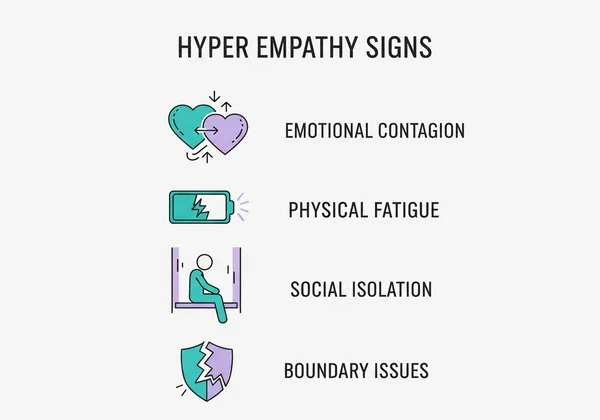
1. Emotional Contagion: Absorbing Others' Moods Instantly
You struggle to block out other people’s emotions. A friend feels anxious—and your body reacts before they even explain what’s wrong. This is often called emotional contagion.
2. Physical Manifestations: Can Empathy Cause Physical Pain?
It can, for some people. Many describe “somatic empathy,” where emotional stress shows up as body symptoms.
- Mirror-touch synesthesia: You may feel a sensation in your own body when you see someone else being touched or injured.
- Unexplained fatigue: Social time leaves you physically drained.
- Stomach issues: Nausea or a “knot” feeling during conflict.
3. Social Hangovers and the Urgent Need for Isolation
Social interaction can feel like processing a huge stream of emotional signals. After gatherings, you may need hours of quiet to recover—even if you enjoyed being there.
4. Difficulty Setting Boundaries
Saying “no” feels painful because you can strongly sense the other person’s disappointment. As a result, you may over-give and under-rest.
5. Excessive Guilt
You feel responsible for other people’s happiness. If someone is sad, you may feel you must fix it—fast.
6. Sensitivity to Media Violence
Violent news, horror, or even intense “cringe” scenes can feel unbearable. The second-hand distress may stick with you long after the video ends.
7. Profound Intuition
On the upside, you often notice small cues others miss—micro-expressions, tone shifts, or tension in a room. This can make you a deeply intuitive friend or partner.
Distinguish the Differences: Hyper Empathy vs. HSP vs. Neurodivergence
A common source of confusion is the overlap between hyper empathy syndrome, being a Highly Sensitive Person (HSP), and neurodivergent conditions like Autism or ADHD. Clarifying the differences can help you choose the right coping tools.
The Link to Highly Sensitive People (HSP)
Dr. Elaine Aron coined the term HSP to describe people with Sensory Processing Sensitivity.
- The Overlap: Many people with hyper empathy also feel easily overwhelmed.
- The Difference: HSP is broader (lights, sounds, textures, stimulation). Hyper empathy is more focused on other people’s emotions.
The Overlap with Autism and ADHD
There is a longstanding myth that autistic people lack empathy. In reality, many neurodivergent individuals report very intense emotional empathy.
- The “Alexithymia” Paradox: You may feel emotions strongly but struggle to name or sort them. This can happen in Autism and ADHD.
- ADHD Connection: Emotional regulation can be harder, so empathy may hit fast and feel overwhelming.
Hyper Empathy vs. Codependency: Identifying the Boundary
Codependency is a behavioral pattern, while hyper empathy is a visceral reaction. But untreated hyper empathy can slide into codependent behavior.
- Hyper Empathy: “I feel your pain in my body.”
- Codependency: “I ignore my needs to fix your pain so I can stop feeling it.”
Knowing the difference helps you protect your energy without shutting down your care.
The Science Behind the Feeling: Causes and Triggers
Why do you experience hyper empathy syndrome while your sibling or partner may not? For many people, it’s a mix of biology and life experience.
Overactive Mirror Neurons: The Biological Basis
In the 1990s, scientists discovered “mirror neurons.” These neurons can fire when we do an action—and also when we watch someone else do it.
- Some research suggests: People with high empathy may have a more reactive mirroring system. When you see someone crying, your brain may respond as if you are crying too.

The Role of Past Trauma and Hyper-Vigilance
Environment matters too. If you grew up needing to predict a parent’s mood to stay safe, you may have learned hyper-vigilance.
- The survival mechanism: Your brain learns to scan faces and tones for danger.
- As an adult, that “scanner” can stay turned on—making you constantly alert to emotional shifts around you.
This is one reason people link hyper empathy patterns with trauma history, chronic stress, or emotional neglect.
Self-Discovery: Where Do You Fall on the Empathy Spectrum?
Understanding you’re not “broken” is the first step. The next step is understanding where you sit on the empathy spectrum. Empathy isn’t a binary switch—it’s a sliding scale.
Note: This section (and any tool you use) is for education and self-reflection only. It’s not a diagnosis.
Why Knowing Your "Empathy Score" Matters
Many people assume everyone feels the world the same way. If your empathy is unusually intense, knowing that can validate your needs—like needing more recovery time, quieter spaces, or clearer boundaries.
Introducing the Empathy Spectrum Assessment
To help you get clarity, we offer a self-reflection assessment that looks at:
- Affective Sensitivity: How strongly you feel others’ emotions.
- Cognitive Understanding: How well you interpret emotional cues.
- Regulation Ability: How quickly you recover after emotional impact.
If you’re curious, you can start here: Explore Your Empathy Profile. Once you know your baseline, you can stop blaming yourself for needing different supports. The goal isn’t to “toughen up.” It’s to build a life that fits your nervous system.
Turn the Burden into a Gift: Management Strategies
The goal isn’t to stop being empathetic—the world needs empathy. The goal is to stop being a martyr to it. Here are practical strategies that can help with hyper empathy syndrome.
Practical Grounding Techniques for Overwhelming Moments
When you feel the “sponge” effect happening, reconnect with your own body:
-
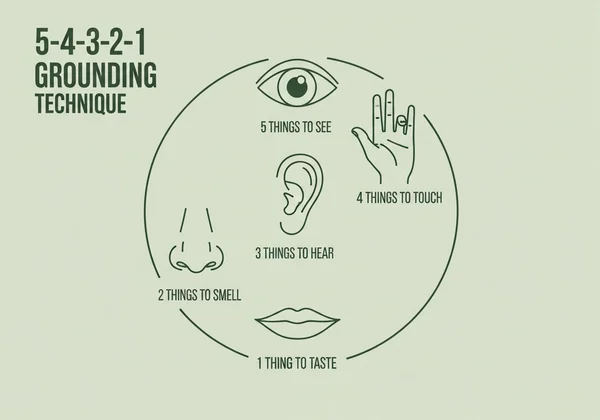
The 5-4-3-2-1 Method: Name 5 things you see, 4 you can touch, 3 you hear, 2 you smell, and 1 you taste. This shifts your attention away from emotional overload and back into the present.
-
Visual Shielding: Before a crowded place, imagine a clear glass wall around you. You can still connect—but you don’t have to absorb everything.
The Gift vs. Burden Framework: Reframing Your Trait
Try a simple reframe:
- The Burden: “I’m too weak to handle this.”
- The Gift: “I’m built for deep connection—but my battery drains faster.”
This mindset shift helps you treat sensitivity like a high-performance engine: powerful, but it needs good fuel and recovery time.
Setting Energetic Boundaries with Loved Ones
This is often the hardest step—and the most protective.
- The “Not Mine” Check: When a strong emotion hits, ask: “Is this mine?” If not, mentally label it: “Not mine.”
- Limit “Trauma Dumping”: You can be caring without taking everything in: “I love you and I want to support you, but I don’t have the capacity for a heavy topic right now. Can we talk tomorrow?”
The Bottom Line: Embracing Your Sensitivity
Living with hyper empathy syndrome can feel like walking around with no skin—everything touches you directly. But it can also be a source of beauty: deep care, strong intuition, and real connection.
The key is to stop fighting your sensitivity and start managing it. By recognizing the signs, understanding the causes, and setting boundaries, you can protect your energy without shutting your heart down. If you want help interpreting your baseline and patterns, you can review your comprehensive empathy test analysis as a next step.
Frequently Asked Questions
Is hyper empathy syndrome a recognized mental illness?
No, it is not listed as a mental disorder in the DSM-5. It is often described as a psychological phenomenon, a personality trait, or a pattern associated with other experiences like high sensitivity, neurodivergence, or trauma response.
Can hyper empathy be cured or managed?
It is not a disease, so it doesn’t need a “cure.” However, the distress associated with it can often be managed. Therapy (such as CBT or DBT), grounding techniques, and boundary setting may reduce the negative impact on daily life.
How do I know if I am an empath or have hyper empathy?
“Empath” is often used as a spiritual or everyday term. Hyper empathy is a psychological descriptor for distress caused by intense affective empathy. If empathy regularly leads to physical symptoms, burnout, or difficulty functioning, it may be in the “hyper” range.
Can medication help with hyper empathy?
There is no pill specifically for empathy. However, if hyper empathy overlaps with severe anxiety or depression, a psychiatrist may recommend medication for those co-occurring symptoms, which can indirectly support emotional regulation.
Is there a test for hyper empathy?
There is no single medical test to diagnose it. However, some self-assessments and psychological scales (like the Interpersonal Reactivity Index) can measure empathy-related traits. Our site provides educational tools to help you explore your empathy profile.